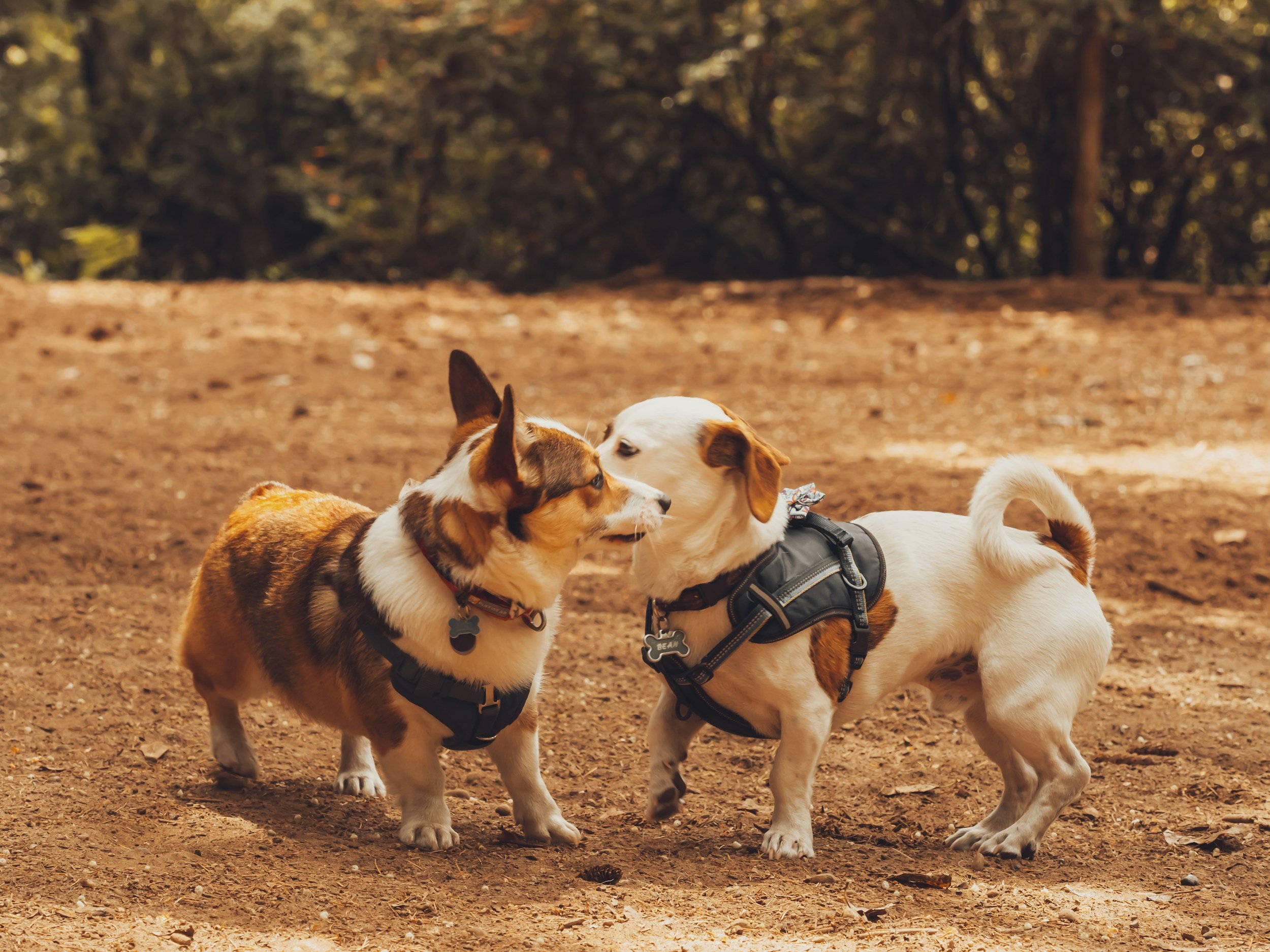
Dogs can become overstimulated when out and greeting…
For many dog owners, walks become stressful not because their dog is aggressive but because they become too excited around other dogs.
Pulling, lunging, whining, barking, spinning, fixating…
It can feel overwhelming and embarrassing, especially when your dog is actually friendly.
The important thing to understand is that overexcitement is still a loss of emotional control.
And for many dogs, constantly greeting or interacting with every dog they see can actually make the problem worse over time.
Excitement and reactivity can look very similar
A lot of owners worry their dog is becoming reactive or aggressive.
Sometimes that’s true.
But very often, the behaviour is driven by frustration and excitement rather than fear.
Your dog sees another dog and immediately anticipates:
interaction
play
stimulation
movement
That anticipation quickly builds arousal.
Once arousal gets too high, listening and calm behaviour become much harder.
Why it often starts young
Many puppies are encouraged to interact with every dog they see.
While social experiences are important, constantly meeting dogs can accidentally create unrealistic expectations.
Your puppy starts learning:
“Dog appears = I get to say hello.”
Over time, that can create frustration whenever they can’t greet.
And frustration often looks like:
pulling
barking
whining
lunging
intense staring
Even though the dog may still be friendly.
The problem with “letting them burn it off”
A common approach is:
“They’re friendly they just need to get it out of their system.”
Unfortunately, repeated high-arousal greetings often strengthen the behaviour rather than reducing it.
Your dog rehearses:
explosive excitement
loss of focus
emotional over-arousal
Instead of learning calmness around other dogs.
Calmness should become the goal
A lot of dogs have never actually learned how to simply exist around other dogs calmly.
That’s the skill worth building.
Not:
forcing interaction
correcting excitement harshly
avoiding every dog completely
But helping your dog learn:
observation without fixation
engagement with you
emotional regulation
calm decision-making
Distance matters more than people realise
One of the biggest mistakes owners make is getting too close too quickly.
If your dog is already:
pulling
fixating
whining
unable to respond
they’re likely over threshold.
At that point, learning becomes difficult.
Creating more distance often helps your dog stay calm enough to think and respond.
Reward calm attention early
Many owners wait until their dog is fully overstimulated before trying to regain attention.
In reality, the best time to reward is before the excitement escalates.
That might mean rewarding:
looking at you
calmly noticing another dog
loose lead walking
choosing not to pull forward
Small repetitions build new habits over time.
Not every walk needs interaction
One of the biggest mindset shifts can be realising that your dog does not need to greet every dog they see.
In fact, for many excitable dogs, fewer greetings often leads to calmer walks overall.
The goal becomes:
Calm neutrality, not constant social interaction.
And that usually creates far more enjoyable walks for both dog and owner.
Why personalised training helps
Overexcitement around dogs can be influenced by:
breed tendencies
age
previous experiences
routine
environment
owner handling patterns
That’s why tailored support often makes such a difference.
Small adjustments in timing, distance, structure and reinforcement can completely change how walks feel over time.
Calm, practical dog training in Richmond & SW London or online
If your dog struggles to stay calm around other dogs, I offer private, in-home dog training across Richmond, Teddington, Twickenham, Kingston and surrounding areas.
Training is tailored to your dog, your routine and the situations you’re actually dealing with day to day.
The aim isn’t perfect robotic behaviour it’s calmer, more enjoyable walks and better communication between you and your dog.