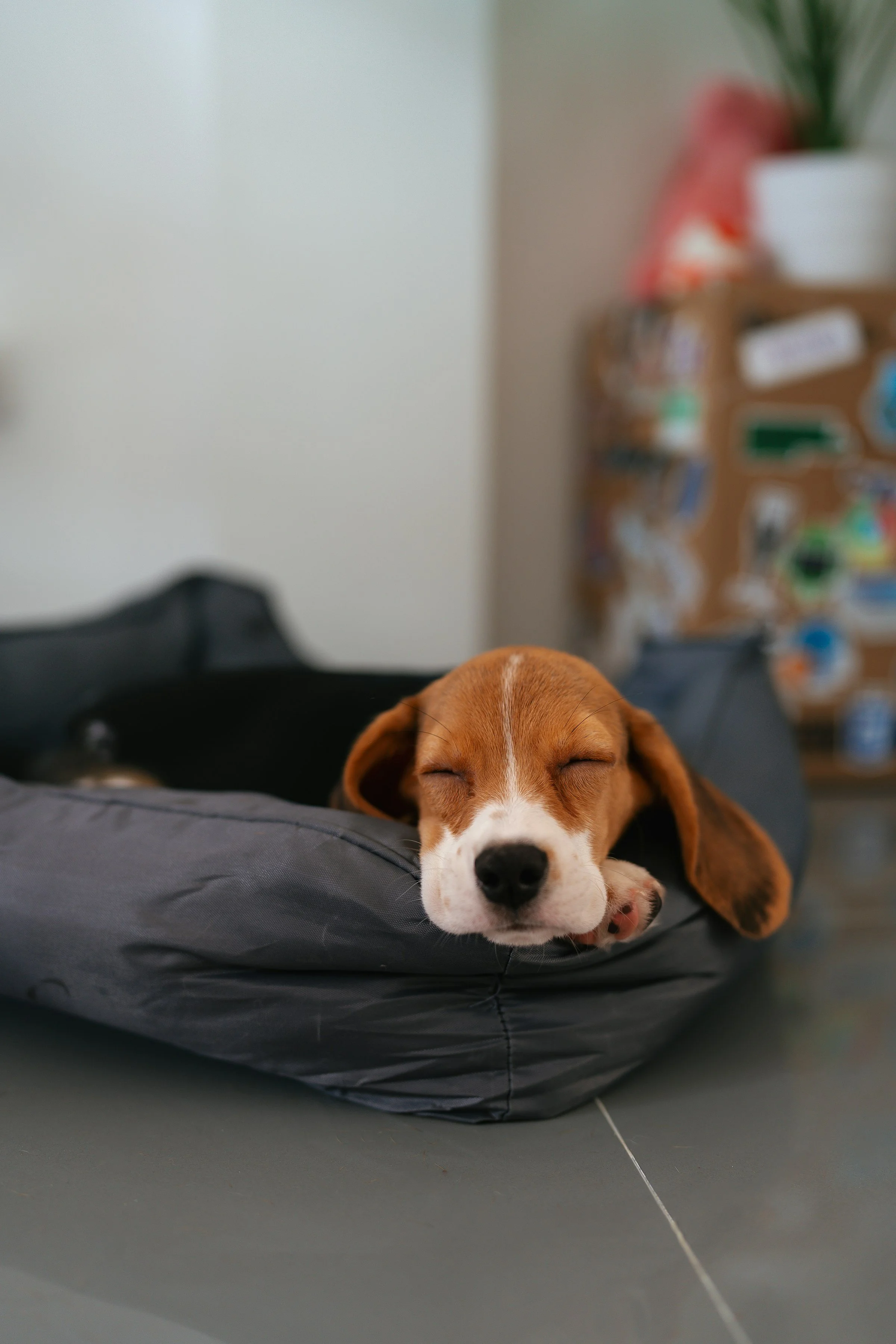
A new puppy can appear to move between two settings: completely asleep and completely busy. When they are awake, there is so much to investigate that rest can look like the last thing on their mind. Owners can then wonder whether the puppy sleeps too much, too little or at the wrong times.
Puppies need a great deal of sleep because their bodies and brains are developing quickly. PDSA notes that some puppies may sleep for 18 to 20 hours in a day. That is a useful guide, not a target that every puppy must meet exactly. Age, breed, health, routine and the excitement of a new home all affect the pattern.
Look at the whole day rather than one nap
Puppy sleep is usually spread across the night and several daytime naps. A puppy may sleep deeply after a new experience, wake for food and toileting, play briefly and then need to rest again. The pattern can change as they mature.
Instead of timing every minute, notice whether your puppy has regular opportunities to sleep and whether they wake ready to eat, explore and interact. A written note over two or three ordinary days can reveal more than watching one unusually busy afternoon.
Overtired puppies do not always look sleepy
An overtired puppy may become faster and more chaotic rather than quietly lying down. You might see more mouthing, grabbing clothes, racing around, barking, difficulty concentrating or an inability to settle after play. These behaviours can have several causes, but tiredness is worth considering.
If a lively period reliably appears after visitors, training, a walk or a long spell awake, bring the next rest opportunity forward. Do not assume that more exercise will solve every burst of energy. Adding stimulation to an already tired puppy can make switching off harder.
Build a gentle daily rhythm
A useful routine alternates activity with quiet time. Meals, toileting, a little training, play and safe exploration can be followed by a calm opportunity to rest. The exact timetable matters less than giving the puppy predictable pauses before they become frantic.
Keep training sessions short. A minute or two of successful practice can be enough for a young puppy. Social experiences can also be tiring, even when the puppy remains still. Watching traffic from your arms or meeting one friendly person involves a large amount of new information.
Make the resting place genuinely restful
Choose a comfortable area away from the busiest route through the home. The puppy should be able to sleep without being repeatedly touched, stepped over or woken for entertainment. Teach children and visitors that a resting puppy needs to be left alone.
Some puppies prefer a bed near the family; others settle better behind a suitable stair gate or in a quieter part of the room. A crate can be useful when it has been introduced gradually and positively, but it should not be used to force a distressed puppy to remain alone.
Help the transition from activity to rest
Move from lively play to something calmer rather than stopping abruptly at the most exciting moment. Offer a toilet opportunity, lower the household activity and provide a familiar resting space. A safe chew may help some puppies settle, with suitable supervision.
You do not need to demand sleep. Create the conditions in which it is likely. Sit nearby if the puppy needs reassurance, especially during their first days at home. As confidence grows, you can gradually make your presence less necessary.
Protect sleep from interruptions
It is tempting to wake a puppy because someone has arrived or because the family wants to play. Repeated interruptions can leave the puppy without a full restorative nap. Whenever practical, let sleeping puppies wake naturally.
Plan introductions and outings around the puppy rather than fitting every experience into one day. One short, positive new experience followed by rest is often more useful than a long list that leaves the puppy overwhelmed.
Keep nights and daytime naps separate
This article is about total daily rest, not simply sleeping through the night. Young puppies may still need toilet trips and reassurance overnight. A puppy who naps during the day is not necessarily causing a night-time problem; withholding needed sleep can make the whole routine more difficult.
Keep bedtime calm and reasonably consistent, but expect adjustment. If the puppy has only just left their mother and littermates, waking in a new home can feel frightening. Comfort and gradual independence are more helpful than leaving a distressed puppy to cry.
Notice changes rather than chasing a perfect number
Individual puppies differ, so use sleep figures as context rather than a pass-or-fail score. What matters is the puppy’s normal pattern. A sudden increase in sleep, unusual lethargy, weakness, reduced appetite or difficulty waking should be discussed with your vet.
Equally, a puppy who rarely rests, seems persistently uncomfortable or cannot settle despite a calm routine may need veterinary or qualified behavioural support. Pain, digestive discomfort, itching, anxiety and environmental disturbance can all affect rest.
Review the environment when settling is difficult
Check temperature, noise, light and household traffic. Make sure the puppy has toileted and is not hungry, thirsty or uncomfortable. Look at what happened immediately before the difficult period. A long visitor session or overexciting game may explain more than the clock does.
Change one element at a time and observe the result. An earlier nap, a quieter room or a shorter activity period may be enough. A simple routine that the household can repeat is more useful than a complicated schedule nobody can maintain.
Rest supports learning
Sleep is not time lost from training. A well-rested puppy is generally in a better position to notice, learn and cope with everyday life. Building rest into the day supports the work you do on toileting, handling, social experiences and calm behaviour.
For kind, practical one-to-one support with puppy routines and everyday training, I work with families in Richmond, Teddington, Twickenham, Kingston, Hampton and nearby areas, as well as online. We can build a realistic plan around your puppy, your household and the life you want to share.
Ready to take the next step?
If you're looking for friendly, reward-based dog training in Teddington, Twickenham, Richmond, Hampton, Kingston and the surrounding areas, I'd love to help or UK wide online.
Get in touch to discuss how we can build a happier, more confident relationship with your dog.
Choosing equipment
If you’re looking for leads, harnesses, calming products or anything else. Take a look at this page here where I’ve collated items for you.