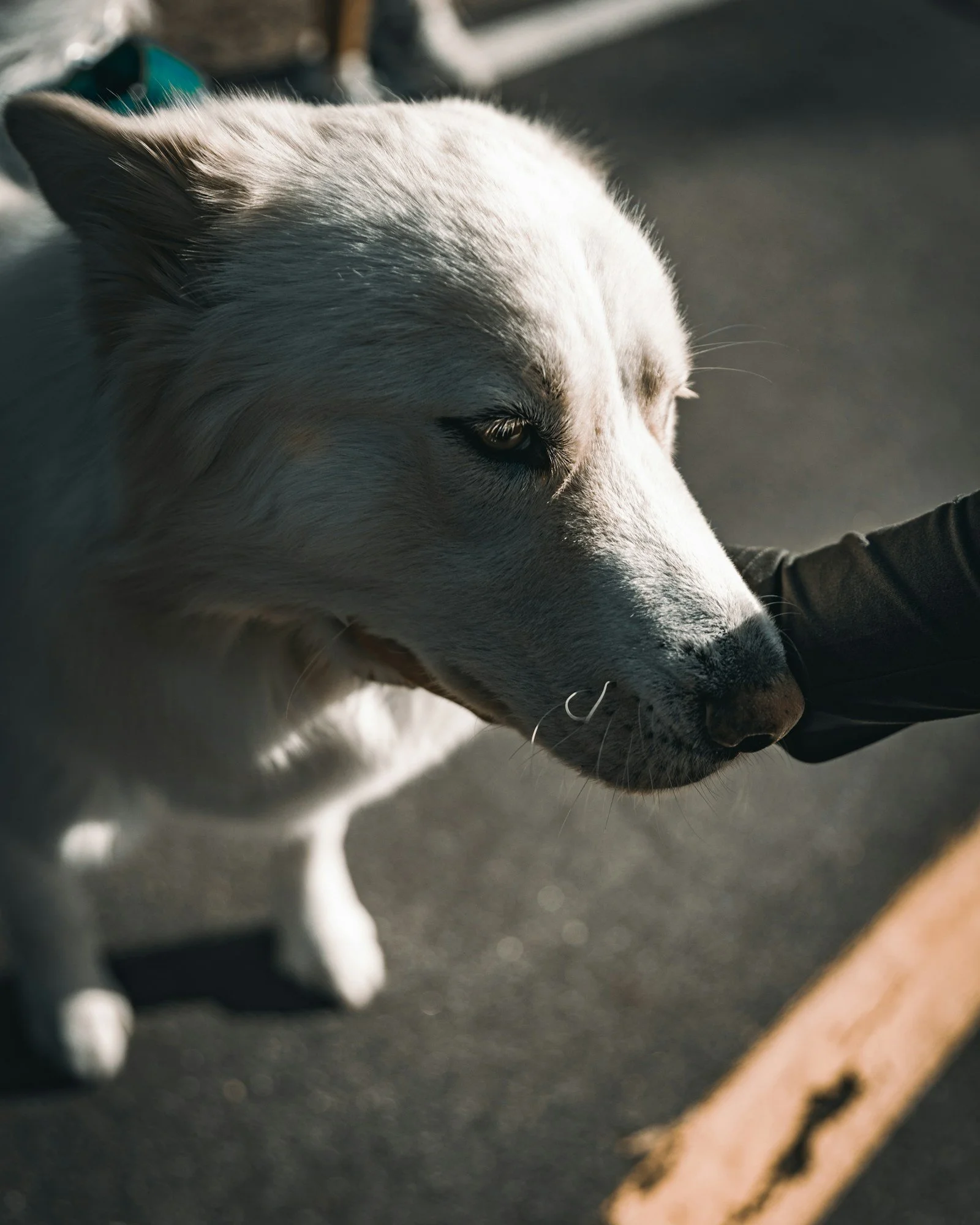
A dog understands an action more easily when the action is clear. A hand target gives them a simple task: approach an offered hand and touch it gently with their nose. It can become a useful way to invite a small change of position without pushing, pulling or taking hold of the collar.
I would begin with the touch itself, in a quiet place, before expecting it to help in everyday situations. The aim is a willing response to a familiar invitation. It should remain something your dog can approach comfortably, rather than a way of making them enter a situation they would prefer to avoid.
Choose a quiet starting point
Practise somewhere familiar, with a non-slip surface and little happening nearby. Have a few small rewards ready before inviting your dog to join you. Choose a moment when they are comfortable and interested, rather than interrupting sleep or trying to compete with an exciting visitor.
Sit or stand in a position that lets you offer your hand at your dog’s natural nose height. Keep your body loose and avoid leaning over them. For a small dog, sitting sideways on a low chair may make the arrangement easier for both of you.
If your dog moves away from hands, freezes, turns their head repeatedly or seems worried, pause. The first task is helping them feel comfortable, which may need a different approach. A new trick should not become a test of how much pressure they will tolerate.
Present an empty hand close by
Offer a relaxed, open palm a few centimetres to one side of the nose. Hold it still and allow your dog to investigate. Do not move the hand into their face or follow the nose around. The important movement is the dog choosing to come towards the target.
Many dogs will sniff a new hand position. If the nose makes gentle contact, immediately say your chosen marker word, such as “yes”, and then deliver a small reward from the other hand. Keep the target hand empty so its appearance can become the signal.
If nothing happens, withdraw the hand calmly and try an easier position after a short pause. You can reward a small voluntary investigation as an initial step, then look for actual contact. Avoid holding the hand out indefinitely while the dog becomes confused.
Make the successful moment clear
The marker identifies the action that earned the reward. For this exercise, that action is nose contact. Say the word as contact happens, then give the food promptly. You do not need your dog to press hard, lick or hold the position for several seconds.
Move the target hand away between repetitions. This creates a clear beginning and end, rather than leaving the dog guessing whether they should keep nudging. Reset your hands, wait a moment and present the target again close to the original position.
Try a few repetitions and then stop for a break. Watch whether the dog starts approaching the presented palm more readily. That change is more useful than counting how many attempts you can fit into a long session.
Keep paws and teeth out of the game
Some dogs offer a paw because an open hand already means “give paw”. Others lick, mouth or become bouncy. Treat this as information about the setup. Withdraw the hand briefly and make the next attempt quieter, closer and easier to understand.
You can present the palm more vertically, with fingers together, if that helps distinguish it from an existing paw cue. Reward a gentle nose investigation before excitement builds. Do not keep presenting the same confusing picture and hope that frustration will produce the right answer.
If teeth contact skin, stop and reassess rather than correcting the dog physically. Consider whether they are tired, overexcited or struggling to distinguish the reward from the target. For persistent mouthing, discomfort or worry about handling, ask for individual guidance before continuing.
Add a word after the action is familiar
Once your dog is reliably choosing to touch the offered palm at close range, introduce a short cue such as “touch”. Say it once just before presenting the familiar hand. Mark the nose contact and reward as before, keeping the rest of the picture easy.
Avoid repeating “touch” while your dog is looking elsewhere. Repeated words can become background noise before they have acquired a clear meaning. If they do not respond, pause, check the environment and return to an easier version rather than adding volume or urgency.
Dogs Trust includes target training among its practical training games. The useful principle is a clearly understood action developed at the dog’s pace. For this first exercise, a brief touch is enough; holding contact for longer would be a separate progression.
Change the hand position a little
Move the palm a small distance left or right, while keeping it close and at a comfortable height. Ask for one touch, reward and reset. This helps your dog learn that the target is the presented hand, rather than one exact point beside your knee.
Change one thing at a time. A new position, a different hand and a new room together may make a familiar task unexpectedly difficult. If the response becomes hesitant, reduce the change and rebuild a few easy successes before asking for more.
Keep all four paws comfortably on the floor. Raising the hand above the head can encourage jumping and creates a different exercise. You are teaching a small, controlled movement towards a target, not testing how far your dog will stretch or leap.
Invite one step of movement
When close touches are easy, place the target just far enough away that your dog needs one small step to reach it. Keep it still, cue once and reward contact. Return to the easy position between attempts so the session does not become progressively harder without relief.
Add distance gradually across sessions. Do not turn the hand into something that repeatedly escapes as the dog reaches it. That can change a simple touch into chasing, frustration or jumping. Let them complete the movement they were invited to make.
An everyday example is asking a relaxed dog to take one step sideways so you can pass in the kitchen. First teach that movement during practice when there is no urgency. Later, use it only where the dog already understands the picture and has comfortable space.
Practise in another familiar place
A reliable touch beside the sofa may become uncertain in the hall. New surroundings add information, so begin close again. Use a few quiet repetitions and reward well before introducing movement. Generalising a cue is part of teaching it, rather than proof that the dog has forgotten.
If another person will use the cue, explain the hand position and reward timing first. Let the dog approach voluntarily. Do not ask unfamiliar people to reach into a worried dog’s space simply because the dog can touch your hand at home.
Outdoors, start in a secure, quiet place with an appropriate lead arrangement. A hand target does not replace a lead, a safe boundary or a trained recall. Keep the exercise simple enough that the dog can notice you without having to ignore an overwhelming situation.
Use the cue without taking away choice
A target can help organise a cooperative movement, but it should not be used to draw a dog closer to something frightening. If your dog is avoiding the harness, another dog or a person, address that concern instead of repeatedly cueing them towards it.
Notice what follows the touch. If the target regularly leads to unwanted handling, the dog may become reluctant to approach it. Keep plenty of repetitions that end simply in a reward and release. Teach necessary handling separately and at a pace the dog can manage.
Finish while the exercise still feels easy. A few clear, comfortable touches are useful progress. If you would like help with reward-based foundation skills, puppy training or everyday cooperation, I offer one-to-one support around Richmond, Teddington and South West London, alongside online sessions across the UK.
Ready to take the next step?
If you're looking for friendly, reward-based dog training in Teddington, Twickenham, Richmond, Hampton, Kingston and the surrounding areas, I'd love to help or UK wide online.
Get in touch to discuss how we can build a happier, more confident relationship with your dog.
View personalised training packages and programmes >>
Choosing equipment
If you’re looking for leads, harnesses, calming products or anything else. Take a look at this page here where I’ve collated items for you.