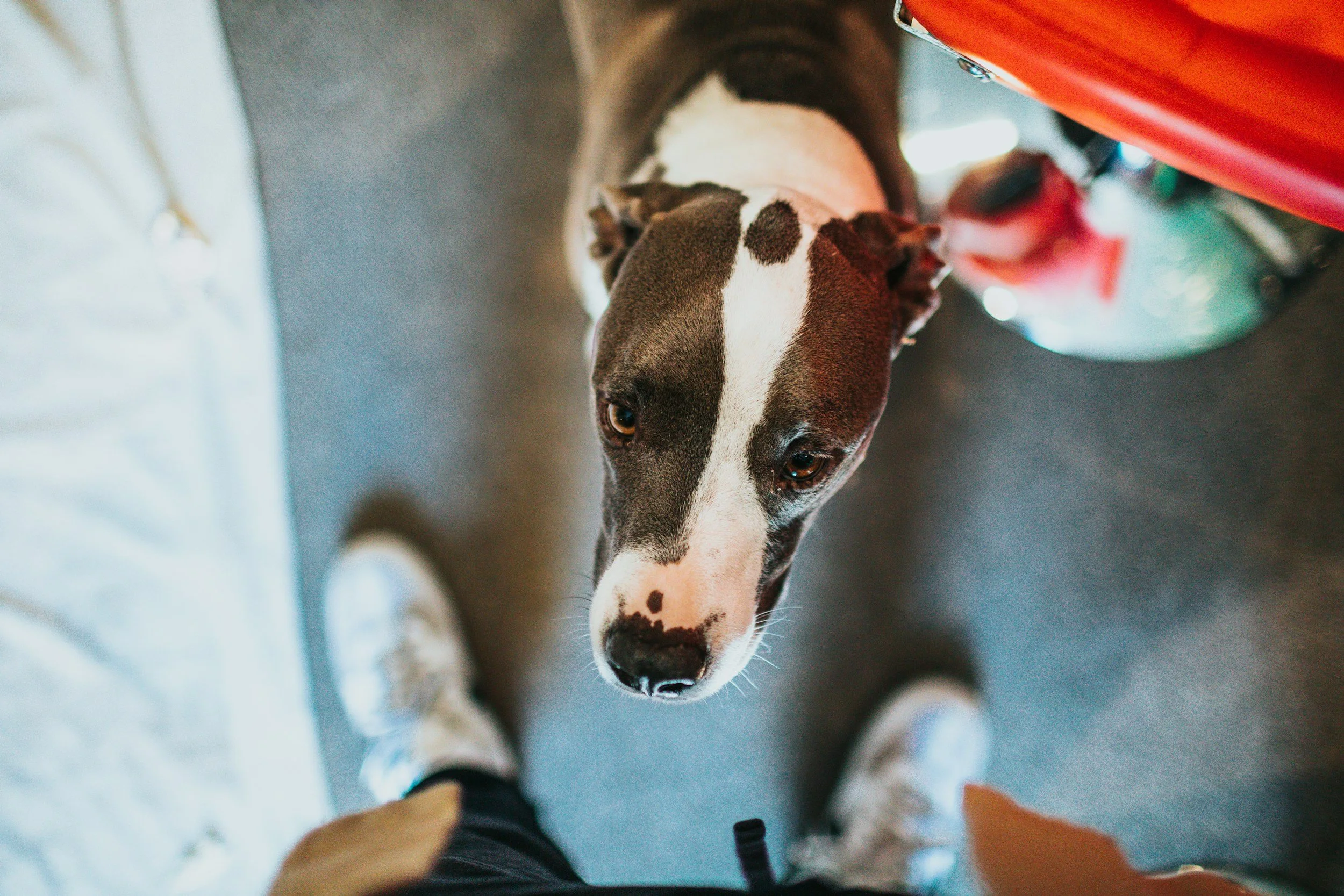
Dog following its owner through the house and watching them closely
One of the questions many dog owners ask at some point is:
"Why does my dog follow me everywhere?"
From room to room. Into the kitchen. Outside the bathroom door.
Sometimes it feels sweet. Other times it can feel a little relentless.
The good news is that in many cases, this behaviour is completely normal.
But understanding why it happens can help you build healthy independence as well as a strong relationship with your dog.
Dogs are naturally social animals
Dogs have evolved to live alongside both other dogs and people.
Because of that, many dogs naturally prefer being near the people they feel most connected to.
Following you around the house is often simply a reflection of that bond.
For many dogs, being close to their owner feels safe, predictable and rewarding.
Following does not always mean separation anxiety
A lot of owners worry that a dog who follows them everywhere automatically has separation anxiety.
That is not always the case.
A dog can enjoy being near you without becoming distressed when left alone.
The important difference is what happens when you actually leave.
A dog with healthy attachment may follow you around the house but still settle comfortably when you go out.
Reinforcement happens without us realising
Dogs are incredibly good at learning patterns.
If following you often leads to:
attention
interaction
food
walks
access to interesting things
then the behaviour naturally becomes stronger over time.
From your dog's perspective, staying close simply makes sense.
Some dogs are more people-focused than others
Breed tendencies can play a role too.
Many companion breeds and working breeds have been selectively bred to stay closely connected to people.
Some dogs naturally monitor their owners more than others and prefer being involved in whatever is happening around them.
That does not necessarily mean anything is wrong.
Puppies often go through a "shadow phase"
Young puppies commonly follow owners everywhere.
Everything in the world is new, and staying close feels safe.
As confidence develops, many puppies naturally become more comfortable spending short periods settling independently.
This process is often helped by building positive experiences away from constant interaction.
Independence is a skill
One thing many owners overlook is that independence often needs to be taught.
Dogs do not automatically learn how to relax alone.
That might involve:
rewarding calm settling
providing enrichment
creating comfortable resting spaces
allowing time for quiet downtime
The goal is helping your dog feel confident whether you are actively engaging with them or not.
Constant attention can sometimes make settling harder
Many owners understandably give attention whenever their dog approaches them.
But if a dog is constantly entertained or engaged, they may have fewer opportunities to practise simply relaxing.
Part of emotional balance comes from learning that not every moment needs interaction.
When should you be concerned?
Following behaviour may be worth looking at more closely if your dog:
becomes distressed when separated
struggles to settle alone
vocalises excessively when you leave
shows signs of anxiety around departures
In those situations, it can be useful to look at the broader picture rather than just the following behaviour itself.
A strong bond and healthy independence can exist together
Following you around the house is often a sign that your dog enjoys your company.
The goal is not stopping that connection.
The goal is helping your dog feel secure both when they are with you and when they are spending time independently.
Those two things can absolutely exist together.
Calm, practical dog training in Richmond & SW London
If you're struggling with clinginess, settling, independence or separation-related concerns, I offer private, in-home dog training across Richmond, Teddington, Twickenham, Kingston and surrounding areas or online UK wide.
Training is tailored to your dog, your routine and the challenges you're experiencing day to day.
The aim is calm, practical progress that works in real life.