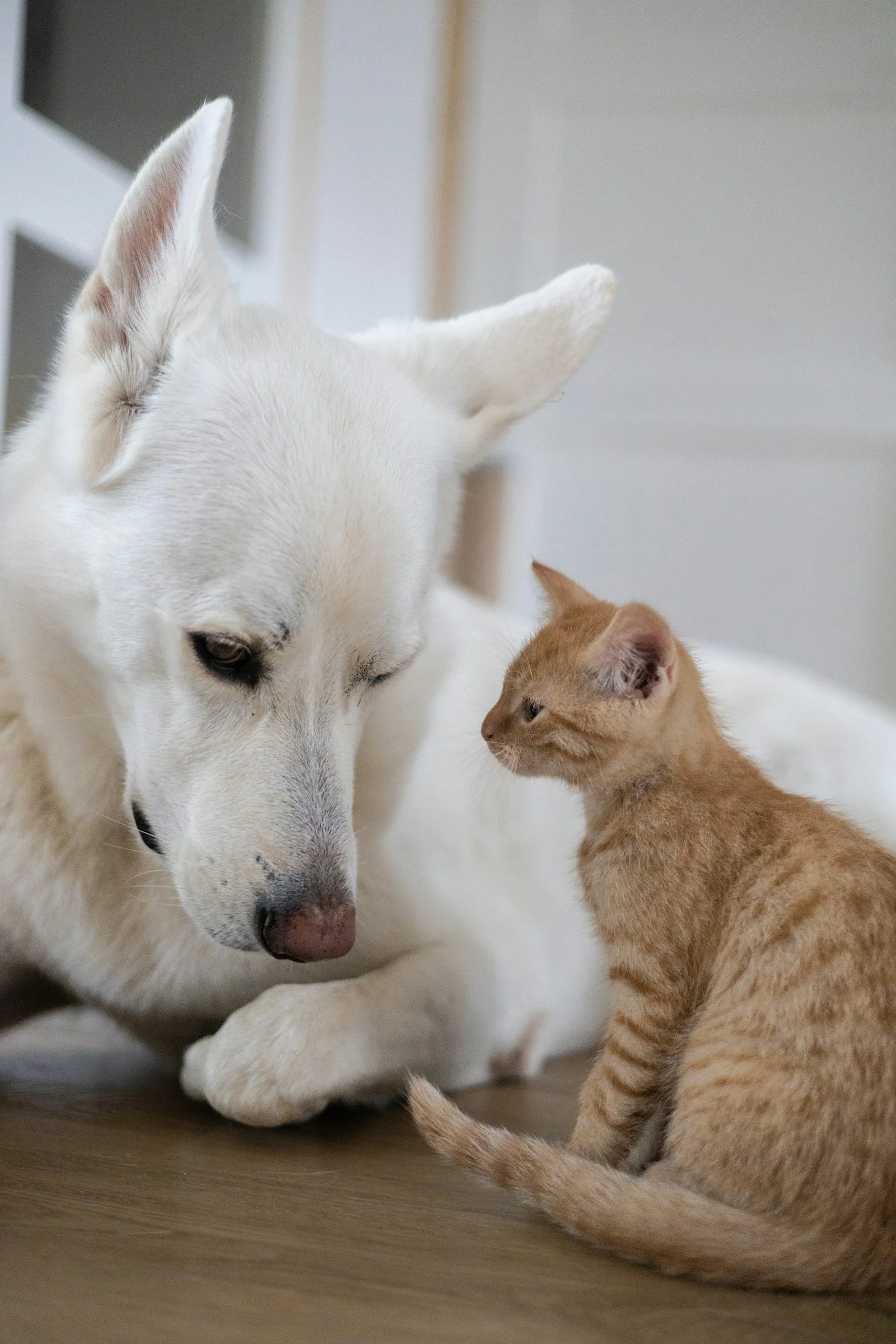
I have a cat and a dog living together, so this is a subject with a personal connection for me. In our home, the cat was older and the dog was a puppy. They now play together, which is lovely to see, and it is one of the reasons I understand the appeal of a home shared by both.
An older cat and a puppy can have a useful opportunity to become familiar with one another while the dog is still young. It does not make the relationship automatic. A puppy can be persistent and excitable, while an older cat may need considerable space and quiet.
My own animals' relationship is one example, rather than a promise for another household. When I help owners, the aim is to understand the animals in front of us and build a plan around their safety and comfort. Peaceful coexistence is a worthwhile outcome even if they never choose to play together.
Begin with both animals in mind
It is natural to focus on the dog if barking, chasing or excited approaches are causing concern. The cat's experience needs equal attention. A cat who stays out of sight or avoids part of the home may be having a difficult time even when there is little obvious confrontation.
Consider what each animal can do comfortably now. Can your cat reach food, water and the litter tray without passing the dog? Can the dog rest while the cat is elsewhere? Look at the ordinary routines before thinking about an introduction in the same room.
Their history matters too. Previous chasing, fear or injury changes the starting point. Tell a trainer what has already happened, including incidents you managed to interrupt. That information helps determine whether ordinary training support is appropriate or whether specialist behaviour support is needed.
Create genuinely separate spaces
Start with secure separation and give each animal access to what they need. The cat should have an area the dog cannot enter, with suitable resting and hiding places and their essential resources. Plan the arrangement so that doors and barriers remain reliable when people move around the home.
Check the barrier against the animals you actually have. A kitten may fit through a gap that looks small, and a dog may jump or push past an unsecured gate. If either animal can get through, the arrangement does not provide the protection you are relying on.
Think about the dog's space as well. They need rest, company and normal activities without spending the day frustrated at a barrier. Separate areas should support both animals' daily lives while you work towards any carefully managed contact.
Let familiarity develop gradually
Scent can provide an early way to become familiar without direct contact. Bedding or a cloth carrying the other animal's scent can be introduced at a comfortable distance, with room to investigate or move away. Avoid placing it in the bed or beside food if that makes an animal reluctant to use those resources.
Watch the response rather than counting days. Comfortable investigation is different from persistent agitation or avoidance. If the scent alone causes concern, direct visual contact would be a much bigger step. A trainer can help you judge an appropriate starting point.
Cats Protection recommends gradual introductions, including separate spaces, scent and controlled visual contact. This is useful preparation, but the sequence still needs to fit the household. A dog with a history of chasing cats should not be taken through a generic introduction plan without individual professional assessment.
Build useful dog skills away from the cat
Practise responding to their name, moving with you and settling on a comfortable mat while the cat is safely elsewhere. Use rewards your dog enjoys and keep the sessions manageable. These skills are easier to learn when the other animal is not creating excitement or worry.
The aim is a dog who can respond comfortably, rather than one held in position while becoming increasingly tense. A sit alone does not show that a dog feels relaxed. Look at the whole response, including whether they can turn away and engage in another familiar activity.
A trainer can help make those foundations practical for your home. We might work on moving away from a doorway or settling while someone crosses the room. The exercise should have a clear everyday purpose before it is used anywhere near the cat.
Keep early visual contact controlled
Visual introductions need enough distance and a secure arrangement that prevents either animal reaching the other. The cat should be free to withdraw to safety. Do not hold the cat in place or use a carrier to make them stay near the dog.
Keep the first opportunities brief and end while both animals are comfortable. There is no requirement to move closer during a session. If your dog can notice the cat and then return attention to you, that can be a useful point to reward and finish.
If either animal becomes tense, increase separation and reconsider the setup. Food can be helpful, but eating is only one piece of information. A dog accepting a treat while remaining rigidly focused on the cat still needs a safer, easier arrangement.
Prevent chasing rather than rehearsing it
Chasing can become rewarding for the dog and frightening or dangerous for the cat. Preventing it is part of the training plan. Do not release the animals together to see whether the cat will teach the puppy a lesson, and do not rely on shouting after the chase begins.
During any later supervised meeting, a lead may help control the dog's access when used as part of an appropriate setup. It should allow calm handling without forcing the dog close. Keep sufficient distance that the dog cannot reach the cat, and never leave a trailing lead unattended.
If a chase does happen, restore separation and review what allowed it. Avoid recreating the situation simply to test the dog again. Repeated incidents, intense fixation or any attempted grabbing need an individual assessment before further direct contact is considered.
Look carefully at apparent play
Seeing my own dog and cat play together is lovely, but the word play needs care. One animal repeatedly pursuing the other does not become a friendly interaction because it looks amusing to us. The cat needs a real ability to leave without being followed or blocked.
Look for loose movement, pauses and voluntary re-engagement, while remembering that a short glimpse cannot establish safety. If one animal freezes, hides, repeatedly retreats or seems unable to end the interaction, separate them calmly and reassess. Size differences can make even excited play risky.
You do not need to encourage play to make the relationship successful. Resting in separate places and moving around the home without concern may be the right outcome. I would rather owners protect that comfort than try to produce a photograph of the animals cuddling together.
Protect ordinary routines
Feeding, resting and access to the litter tray deserve ongoing attention. Keep food separate so neither animal needs to defend a meal or hurry past the other. Make sure the dog cannot investigate the litter tray or block the route to it.
Provide useful escape routes and resting places for the cat, including height where appropriate. A high perch helps only if the cat can reach and leave it safely. A single shelf above a dog who waits underneath may leave the cat feeling trapped.
Puppies also need sufficient rest and appropriate activity away from the cat. An overtired or excited puppy can find movement especially difficult to ignore. A predictable routine gives you more opportunities to practise calm behaviour under conditions the puppy can manage.
Use a trainer to assess the setup
A trainer can help observe your dog's responses, identify where the environment is making things harder and break the work into manageable steps. That might include adjusting distances, improving barriers or teaching the dog a reliable way to move away with you.
My experience of living with both species gives me a personal appreciation of the goal. The professional contribution is to assess your situation and support reward-based learning, rather than assume that what happened in my home will happen in yours. Your cat's welfare remains part of that discussion throughout.
There are limits to a trainer's role. Pain, illness or sudden behaviour changes need veterinary attention. Where there is serious fear, aggression, a history of injury or concern about predatory behaviour, I may recommend a vet-led referral to a suitably qualified clinical animal behaviourist, with feline expertise where needed.
Set a realistic goal for your home
Progress might begin with a dog resting on one side of the home while the cat uses the other comfortably. Later, it may mean calm visual contact or short supervised periods in a shared space. The next step depends on both animals, with no fixed timetable.
Continue to supervise shared time and keep them securely separated when you cannot supervise. Some households will need that arrangement long term. If safe, comfortable coexistence is not achievable, professional advice can help you consider the animals' welfare and the options available without blame.
If you live around Richmond, Teddington or the surrounding areas and would like help, tell me about both animals and what currently happens at home. We can discuss whether tailored dog training is a suitable starting point and what further support may be appropriate.
Ready to take the next step?
If you're looking for friendly, reward-based dog training in Teddington, Twickenham, Richmond, Hampton, Kingston and the surrounding areas, I'd love to help or UK wide online.
Get in touch to discuss how we can build a happier, more confident relationship with your dog.
Choosing equipment
If you’re looking for leads, harnesses, calming products or anything else. Take a look at this page here where I’ve collated items for you.