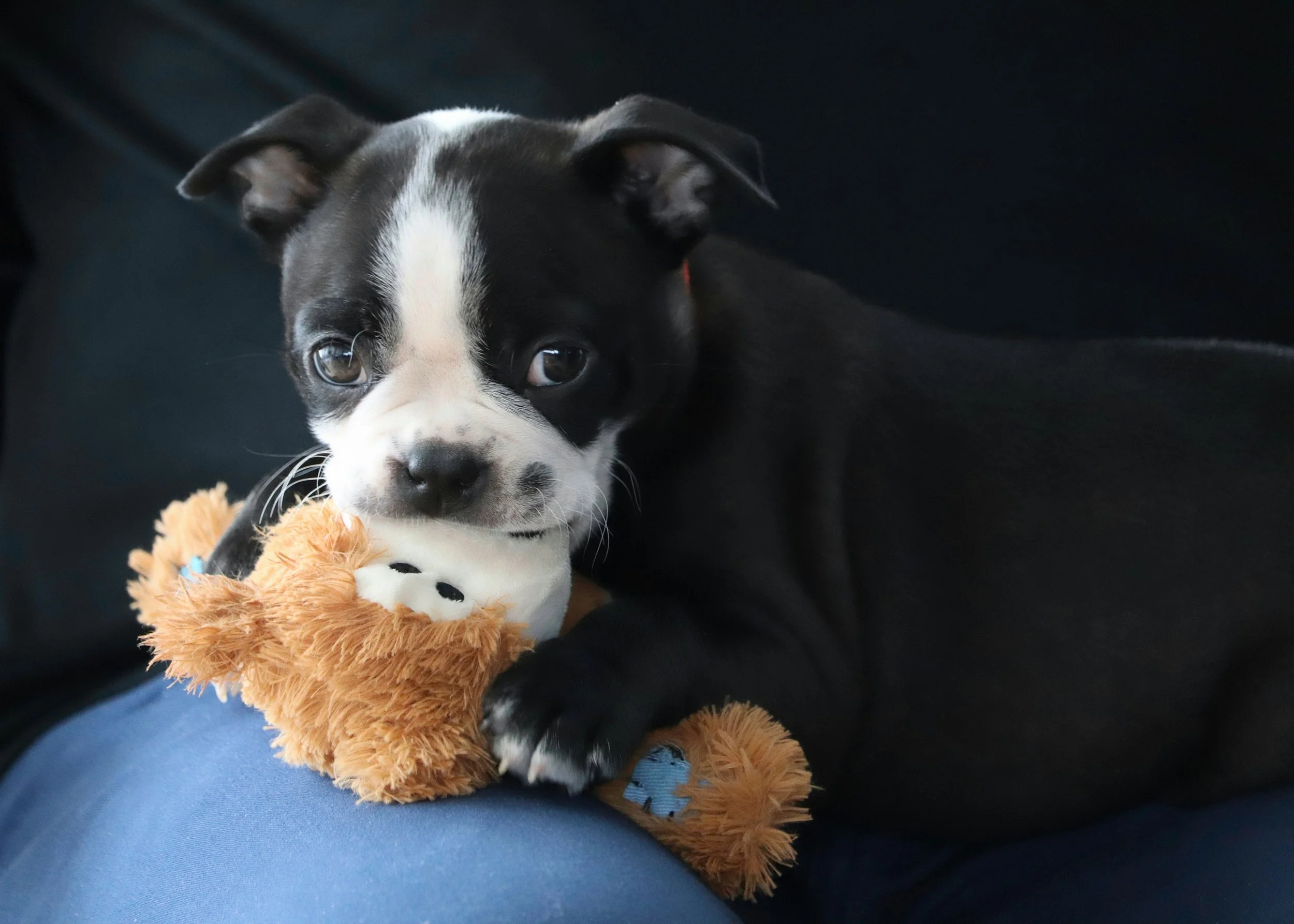
Puppy biting and nipping is one of the most common (and frustrating) challenges new owners face.
If your puppy is constantly grabbing your hands, clothes, or ankles, you’re not alone and the good news is, this behaviour can be improved with the right approach.
In this guide, I’ll explain why puppies bite, what not to do, and how to gently teach calmer behaviour.
Why Do Puppies Bite?
Puppy biting is normal developmental behaviour. It happens for several reasons:
1. Teething
Just like babies, puppies experience discomfort as their adult teeth come through. Chewing and mouthing help relieve this.
2. Play Behaviour
Puppies learn about the world using their mouths. When playing with littermates, they bite and wrestle — so they often try this with people too.
3. Over-Tiredness
Many puppies bite more when they are tired or overstimulated. A “naughty” puppy is often just exhausted.
4. Frustration or Excitement
When puppies become overexcited, biting can be their way of releasing energy.
Understanding the cause helps you respond calmly rather than reacting emotionally.
Common Mistakes That Make Biting Worse
Many well-meaning owners accidentally reinforce biting without realising it.
Always. always to avoid:
❌ Shouting or scolding
❌ Smacking hands away
❌ Holding the mouth closed
❌ Playing rough games with hands
❌ Encouraging chasing or wrestling
These responses can increase excitement, fear, or confusion making biting worse over time.
How to Reduce Puppy Biting
(Step by Step)
Here are the most effective, kind, and evidence-based ways to reduce nipping.
✅ 1. Always Provide Appropriate Chews
Make sure your puppy has access to:
Rubber chew toys
Soft puppy-safe chews
Textured teething toys
Rotate them regularly to keep them interesting.
If your puppy starts biting you, calmly redirect to a toy.
✅ 2. Teach “Gentle” Play
When playing:
Keep movements slow and calm
Avoid waving hands
Use toys for interaction
If biting starts, stop play for a few seconds.
This teaches:
“Biting makes the fun stop.”
✅ 3. Use Calm Withdrawal (Not Punishment)
If your puppy bites:
Freeze briefly
Calmly stand up
Step away for 10–20 seconds
No shouting. No drama.
This removes attention — which is what most puppies want.
✅ 4. Support Good Rest and Sleep
Overtired puppies bite more.
Most young puppies need:
18–20 hours of sleep per day
Regular nap times
Quiet rest areas
If biting increases in the evening, your puppy may simply need more rest.
✅ 5. Reward Calm Behaviour
Don’t only notice biting.
Also reward:
✔ Calm sitting
✔ Gentle interaction
✔ Relaxing on a mat
✔ Playing quietly
Use praise and small treats to reinforce these moments.
You get more of what you reward.
How Long Does Puppy Biting Last?
With consistent training, most puppies improve significantly between:
🕒 4–7 months of age
However, progress depends on:
Consistency
Routine
Handling
Environment
Some puppies need extra support and that’s completely normal.
When to Get Professional Help
If biting is:
Very intense
Causing injury
Not improving
Linked to fear
Creating stress in the household
…it’s a good idea to seek professional support.
Early guidance prevents long-term issues.
How In-Home Training Can Help
In-home training allows me to see:
When biting happens
What triggers it
How family members respond
Daily routines
This means I can create a personalised plan that fits your real life not just generic advice.
Get Support With Your Puppy in Richmond & SW London
If you’re struggling with puppy biting or other early behaviour challenges, I’d be happy to help.
I offer private, bespoke in-home puppy training across Richmond, Teddington, Kingston, Twickenham, and surrounding areas.
Together, we can help your puppy grow into a calm, confident, well-behaved companion.
Helping You and Your Dog Build Your Best Lives
Training isn’t about perfection it’s about progress, understanding, and building a strong relationship.
With the right support, puppy biting can become a temporary phase, not a lasting problem.