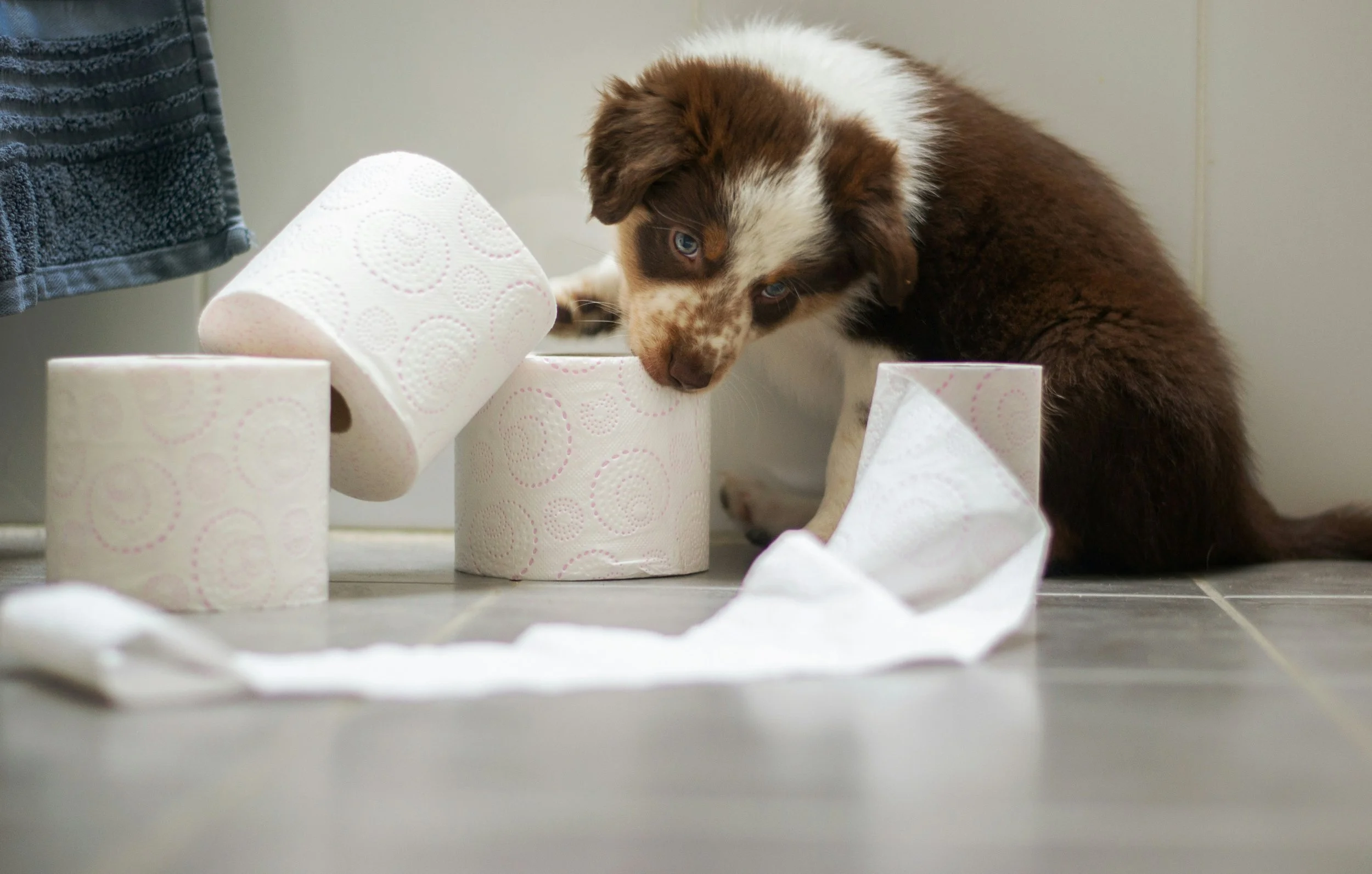
Toilet training is one of the first big challenges new puppy owners face — and one of the most stressful when it doesn’t go to plan.
Accidents on carpets, sleepless nights, and constant cleaning can quickly become overwhelming.
The good news? With the right routine, clear guidance, and consistency, most puppies can learn good toilet habits quickly and calmly.
In this guide, I’ll explain how toilet training works, common mistakes to avoid, and how to set your puppy up for success.
When Should Toilet Training Start?
Toilet training should begin from the very first day your puppy comes home.
Puppies don’t naturally know where to go — they learn through repetition and routine.
The earlier you start, the easier it becomes.
How Puppies Learn Toilet Habits
Puppies learn through:
✔ Timing
✔ Routine
✔ Reward
✔ Supervision
They do not learn through punishment.
If a puppy has an accident, it means:
They weren’t supervised closely enough, or they weren’t taken out soon enough.
It’s information, not bad behaviour.
How Often Does a Puppy Need the Toilet?
As a general guide:
After waking up
After eating or drinking
After playing
After training
Before bedtime
Every 1–2 hours when young (to start with every 30 mins is a good rule of thumb to play by)
Young puppies cannot “hold it” for long. Expect frequent trips outside. Have your coat and wellies ready for all times of day and night!
Step-by-Step Guide to Toilet Training
Here’s a simple, effective system that works for most puppies.
1. Create a Clear Routine
Take your puppy to the same toilet area each time.
Use a consistent phrase such as:
“Be quick”
“Go toilet”
“Hurry up”
Over time, this becomes a cue.
2. Supervise Closely Indoors
Until toilet training is reliable:
Keep your puppy in the same room as you
Use baby gates if needed
Avoid unsupervised roaming
If you can’t watch them, reduce their space.
3. Reward Immediately
When your puppy toilets outside:
✔ Praise calmly
✔ Give a small treat
✔ Do it straight away
Timing matters. Reward within 2 seconds. Do not disturb them whilst they are going or this can actually be counter intuative.
4. Use a Calm Night Routine
Night accidents are common.
To reduce them:
Remove water 1–2 hours before bed
Take puppy out last thing at night
Use a consistent bedtime routine
Set an alarm if needed
Most puppies improve within weeks.
5. Clean Accidents Properly
If accidents happen indoors:
Use enzymatic cleaner
Avoid ammonia-based products
Don’t let puppy see you “react” (this really is important)
Remaining scent encourages repeat behaviour.
Common Toilet Training Mistakes
Many owners unknowingly slow progress.
Watch out for:
❌ Inconsistent routines
❌ Expecting too much too soon
And above all, absolutely none of the below. I’s not the 80’s and this is hugely unkind!!
❌ Punishing accidents
❌ Rubbing noses in mess
❌ Shouting
These greatly increase anxiety, confusion and your puppies chance of success.
Puppy Pads: Helpful or Harmful?
I’m really not a fan of these. Puppy pads, you could argue, be useful in really only some situations. or very, very early stages if outside really, really isn’t an option. However, if you are using these it can:
Delay outdoor training
Create confusion
Encourage indoor toileting
If you really must use pads, have a clear plan to phase them out.
How Long Does Toilet Training Take?
With consistency, most puppies are:
✔ Mostly reliable by 4–5 months
✔ Very reliable by 6 months
Some take longer, especially smaller breeds. Some dogs are quicker. Your dog is an individual and unique… Patience goes a long, long way. It’s never the dog doing it on purpose.
This is normal.
When Toilet Training Isn’t Improving
If your puppy:
Has frequent accidents
Seems unaware of needing to go
Toilets immediately after coming in
Shows anxiety around toileting
You may benefit from professional guidance.
Small adjustments can make a big difference.
How In-Home Training Helps With Toilet Training
In-home support allows me to assess:
Your layout
Your routine
Sleeping arrangements
Feeding schedule
Supervision patterns
This helps create a plan that works for your real life, not just generic advice.
Get Support With Puppy Training in Richmond & SW London
If you’re struggling with toilet training or early puppy challenges, I’d be happy to help.
I offer private, bespoke in-home puppy training across Richmond, Teddington, Kingston, Twickenham, and surrounding areas.
Together, we can build calm routines and confident habits from the start.
Helping You and Your Dog Build Your Best Lives
Toilet training doesn’t have to be stressful.
With patience, structure, and the right support, it becomes a manageable phase not a daily battle.