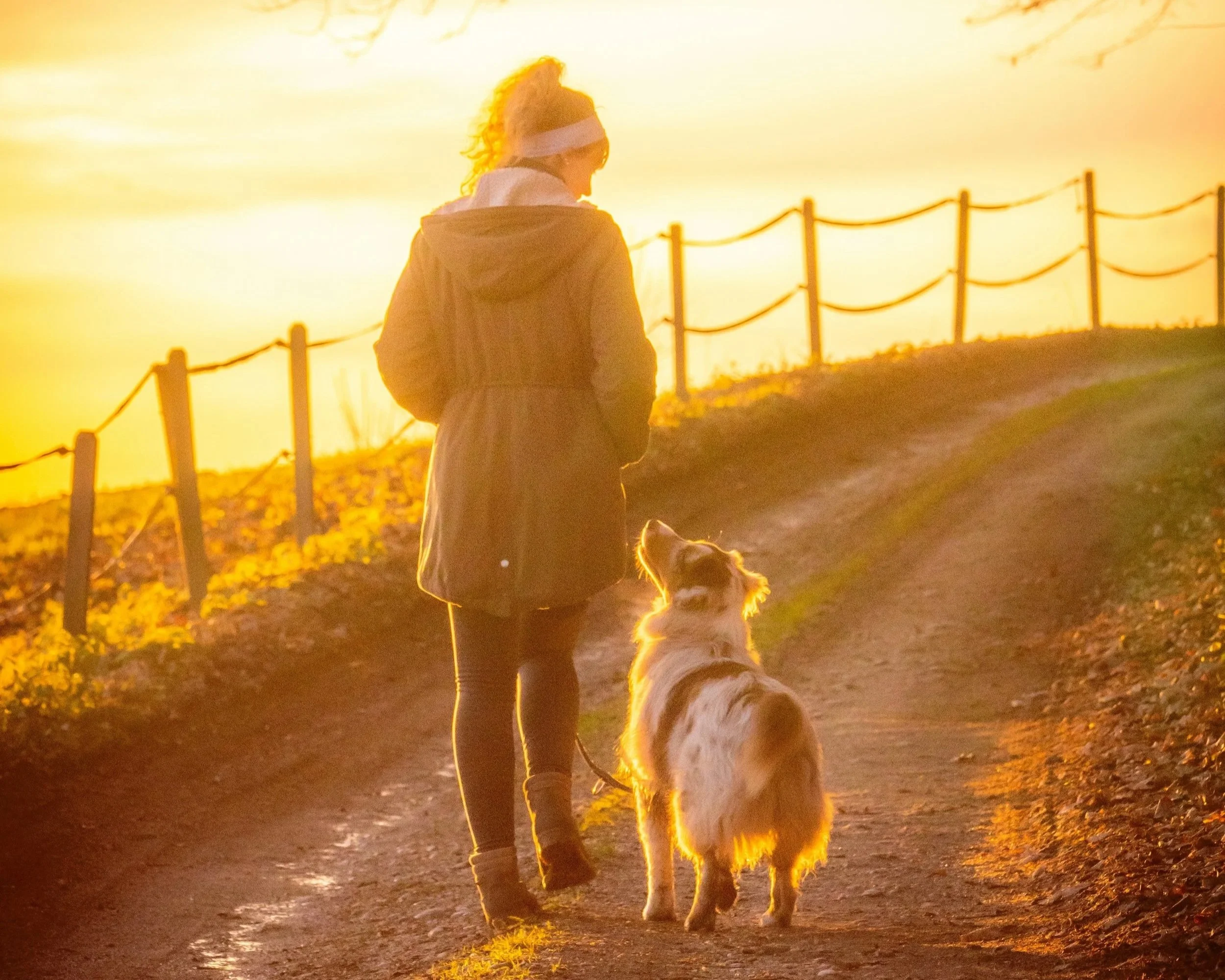
If walks with your dog feel more like being dragged down the street than enjoying fresh air, you’re not alone.
Lead pulling is one of the most common challenges dog owners face — and one of the most frustrating.
The good news is: with the right training approach, most dogs can learn to walk calmly on a loose lead.
In this guide, I’ll explain why dogs pull, common mistakes to avoid, and how to build better walking habits.
Why Do Dogs Pull on the Lead?
Pulling isn’t stubbornness or bad behaviour.
It happens because:
1. Dogs Walk Faster Than Humans
Naturally, dogs move more quickly than we do. When restrained, they pull to reach their preferred pace.
2. Excitement and Curiosity
Smells, sounds, people, and other dogs create huge motivation to move forward.
3. Learned Behaviour
If pulling has ever worked, it becomes a habit.
Dogs repeat what gets results.
4. Lack of Clear Guidance
Many dogs have never been taught how to walk calmly — they’ve simply been walked.
Common Mistakes That Make Pulling Worse
Well-meaning owners often reinforce pulling without realising.
Avoid:
❌ Using retractable leads
❌ Yanking or jerking the lead
❌ Constantly saying “heel”
❌ Letting pulling lead to progress
❌ Walking when your dog is overstimulated
These approaches increase frustration and confusion.
How to Teach Loose-Lead Walking (Step by Step)
Here’s a practical, kind, and effective system.
1. Use the Right Equipment
Start with:
✔ A well-fitted harness
✔ A standard 1.2–1.5m lead
✔ Comfortable walking shoes (for you!)
Avoid choke, prong, or shock collars.
2. Start Training Indoors
Begin in a low-distraction environment.
Practise:
Walking a few steps
Rewarding calm following
Turning frequently
Build skills before adding distractions.
3. Reward Position, Not Distance
Focus on rewarding:
✔ Walking beside you
✔ Loose lead
✔ Attention
✔ Calm pace
Not how far you go.
Quality first. Distance later.
4. Stop When the Lead Tightens
If your dog pulls:
Stop walking
Wait for slack
Reward
Continue
This teaches:
Pulling = no progress
Calm walking = movement
5. Keep Walks Manageable
Long walks with poor behaviour don’t help.
Short, successful walks build better habits.
Aim for:
10–15 minutes of quality
Multiple times per day
Gradually increasing duration
How Long Does Loose-Lead Training Take?
Most dogs improve within:
🕒 3–6 weeks with consistency (Often sooner)
Progress depends on:
Daily practice
Calm handling
Environment
Owner patience
Some dogs need extra support and that’s normal.
When to Get Professional Help
If pulling is:
Causing injury
Creating stress
Not improving
Linked to reactivity
Professional guidance can make training faster and clearer.
How In-Home Training Improves Walking Behaviour
In-home training allows me to assess:
Walking routes
Triggers
Handling technique
Equipment
Timing and rewards
This leads to personalised plans that work in real life not just in theory.
Get Support With Loose-Lead Training in Richmond & SW London
If walking your dog feels stressful rather than enjoyable, I’d be happy to help.
I offer private, bespoke in-home dog training across Richmond, Teddington, Kingston, Twickenham, and surrounding areas.
Together, we can build calm, enjoyable walks.
Helping You and Your Dog Build Your Best Lives
Walking your dog should be a pleasure, not a battle.
With the right guidance and consistency, loose-lead walking becomes a habit not a struggle.