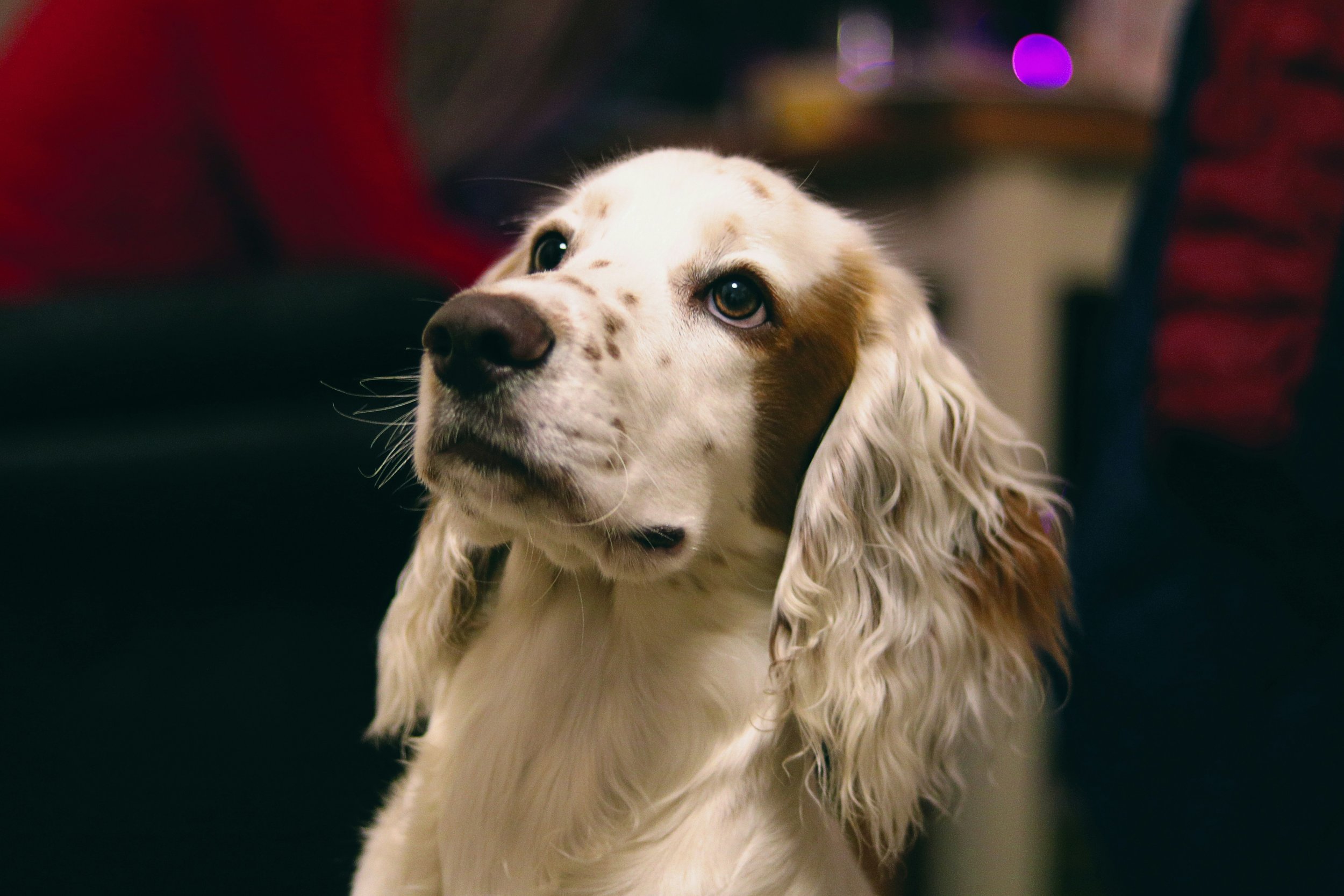
Dogs sometimes struggle to listen…
If you’ve ever felt like your dog listens perfectly at home… but completely ignores you outside, you’re not alone.
It’s one of the most common frustrations I hear from dog owners across Richmond, Teddington and South West London.
And it’s easy to jump to conclusions.
“They’re stubborn.”
“They’re ignoring me.”
“They know what I’m asking, they just won’t do it.”
But in most cases, that’s not what’s happening at all.
It’s not stubbornness, it’s context
Dogs don’t generalise behaviour in the same way we do.
Just because your dog understands something in your living room doesn’t mean they automatically understand it in the park.
To them, those are completely different environments.
At home:
Low distraction
Familiar space
Easy to focus
Outside:
New smells
Other dogs
People
Movement and noise
So when your dog “doesn’t listen”, it’s often because:
They can’t, not because they won’t.
Distraction always wins if it’s more rewarding
Every behaviour is a choice.
And that choice is influenced by what feels more rewarding in that moment.
If calling your dog means:
The fun stops
The lead goes on
The walk ends
Then ignoring you might feel like the better option.
This is where training needs to shift from control to motivation.
Clarity matters more than repetition
Repeating a cue over and over doesn’t make it clearer.
It often does the opposite.
If your dog hears:
“Come… come… come… COME…”
They quickly learn that the first few cues don’t really matter.
Instead, focus on:
Giving the cue once
Making it achievable
Reinforcing when they get it right
Build success before expecting reliability
One of the biggest mistakes is expecting too much, too soon.
Training needs to be built in layers.
Start in:
Quiet environments
Short distances
Low distraction
Then gradually increase difficulty.
Not jump straight to the park and hope for the best.
A calmer, more realistic approach
Good training isn’t about control.
It’s about understanding how your dog learns and setting them up to succeed.
Once you shift that perspective, things start to change.
Your dog becomes more responsive.
You feel more confident.
And training becomes something you both enjoy.
Final thoughts
If your dog isn’t listening, it’s not a sign that they’re difficult or stubborn.
It’s usually a sign that something in the training process needs adjusting.
Often small changes can make a big difference.
If you’d like support working through this with your dog, I offer bespoke one-to-one training across Richmond, Teddington and South West London.
Find out more here: