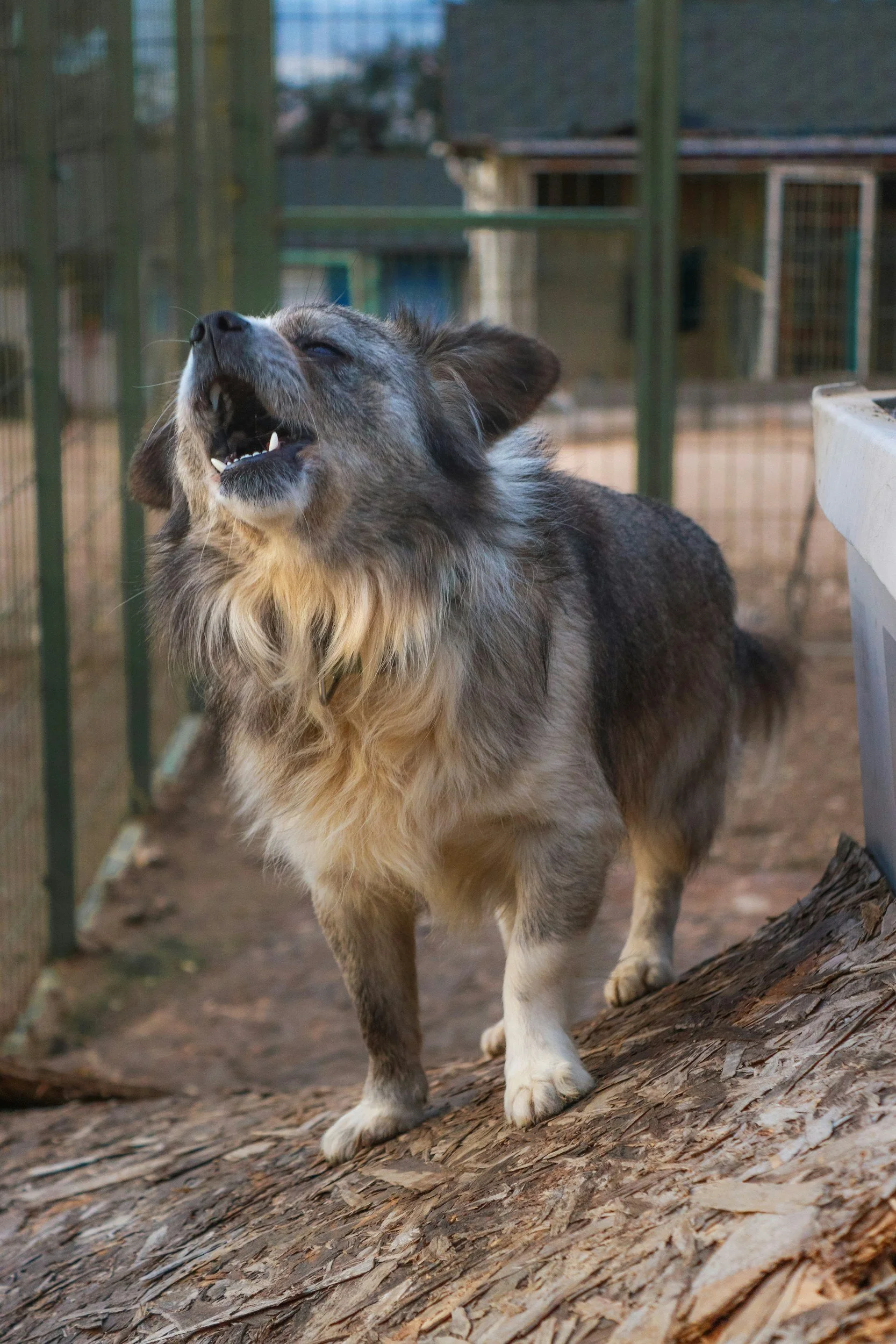
Dog Barking at What Seems Like Everything
If your dog seems to bark at everything, it can feel exhausting.
People walking past the window. Dogs on walks. Noises outside. Visitors at the door. The neighbour’s bin. Someone closing a car door. A leaf moving suspiciously in the garden.
When it happens again and again, it is easy to feel frustrated or embarrassed, especially if you are trying to keep things calm at home or enjoy a simple walk.
But barking is not usually your dog being difficult. More often, it is your dog communicating that something has caught their attention, worried them, excited them, frustrated them, or pushed them slightly over their comfort level.
Understanding why your dog is barking is the first step towards helping them feel calmer.
Barking is communication
Dogs bark for many different reasons.
They may be saying:
“I have noticed something.”
“I am not sure about that.”
“I want to get closer.”
“I want that to move away.”
“I am excited.”
“I need help calming down.”
To us, barking can sound like one general behaviour. But for your dog, the feeling behind the bark can be very different.
A dog barking at another dog on a walk may be worried. Another dog may be frustrated because they want to say hello. Another may be overexcited and simply unable to regulate themselves in that moment.
This is why it helps to look at the whole picture, not just the noise.
Common reasons your dog may be barking
They are alerting you
Some dogs are naturally quick to notice changes in the environment.
They may bark when someone walks past the house, when they hear a noise outside, when a delivery arrives, or when they see movement through a window.
From your dog’s point of view, they may simply be saying, “Something is happening.”
This type of barking can become more frequent if your dog spends a lot of time watching the world go by from a window, doorway or garden. The more they practise barking at passing people, dogs or sounds, the more automatic it can become.
They are unsure or worried
A dog barking at people, dogs, bikes, traffic or unfamiliar situations may not be trying to be aggressive.
They may be unsure.
Barking can be a way of asking for space. It may be your dog’s way of saying, “I am not comfortable with this being so close.”
This is especially common when a dog is on lead and cannot move away freely. They may feel trapped, restricted or under pressure, even if the thing they are barking at is not actually a threat.
If the barking is linked with lunging, a stiff body, staring, growling, raised hackles, hiding, freezing or struggling to recover afterwards, it is worth taking seriously and getting support.
They are frustrated
Not all barking comes from fear.
Some dogs bark because they want to get to something and cannot.
This might be another dog, a person they like, a squirrel, a toy, a smell, or an exciting place.
This type of barking is often seen on lead. Your dog may be desperate to move forward, but the lead prevents them from doing so. The result can be barking, pulling, spinning, whining or jumping.
The dog is not necessarily being “bad”. They may simply be struggling with frustration and impulse control.
They are overexcited
Some dogs bark when their arousal levels are too high.
This can happen before a walk, when visitors arrive, during play, around other dogs, or in busy environments.
The barking may come with bouncing, mouthing, pulling, jumping up or finding it difficult to listen.
In these moments, your dog may not need more excitement. They may need help coming back down again.
Calmness is a skill, and some dogs need to be taught how to settle.
They have learned that barking works
Dogs repeat behaviours that work for them.
If barking gets attention, starts play, makes someone move away, gets a door opened, brings you into the room, or leads to something exciting happening, your dog may learn that barking is useful.
This does not mean they are being manipulative. It simply means the behaviour has been reinforced in some way.
For example, if your dog barks at the window and the person outside walks away, your dog may think the barking worked. If they bark at you and you immediately look at them, talk to them or give them something to do, they may learn that barking gets a response.
Again, this is not about blame. It is about understanding the pattern.
Why shouting often does not help
When a dog is barking, it can be tempting to shout “no”, “quiet” or “stop it”.
This is understandable, especially if you are tired, stressed or worried about disturbing other people.
But shouting often adds more noise and tension to the situation.
Your dog may not understand what you want them to do instead. They may also think you are joining in, or they may become more stressed because the environment now feels even more intense.
Punishing barking can sometimes suppress the noise in the moment, but it does not always deal with the reason behind it.
A calmer approach is usually more helpful.
What can help instead
The goal is not just to stop the barking.
The goal is to help your dog feel safer, calmer and more able to cope.
Here are some useful starting points.
Look for the trigger
Try to notice what happens just before your dog barks.
Is it a noise? A person? Another dog? Movement outside? A visitor arriving? Being left alone? Frustration because they cannot get to something?
Once you know what tends to set the barking off, you can start to manage it more effectively.
Reduce rehearsal where you can
If your dog spends a lot of time barking out of the window, in the garden or at the front door, try to reduce how often they can practise that behaviour.
This might mean closing blinds, using window film, moving furniture away from the window, bringing your dog in from the garden sooner, or creating a quieter resting area.
This is not avoiding the problem. It is giving your dog fewer opportunities to keep rehearsing the behaviour while you work on calmer alternatives.
Create more distance on walks
If your dog barks at other dogs, people, bikes or traffic, distance is your friend.
Trying to train too close to the trigger often makes things harder. Your dog may already be too overwhelmed to listen or learn.
Move further away, cross the road, turn calmly in another direction, or give your dog more space.
When your dog can notice something without immediately reacting, you are in a much better place to reward calm behaviour.
Reward calm noticing
If your dog sees something and stays calm, even for a second, reward that.
You are not rewarding the trigger. You are rewarding your dog for noticing something and not escalating.
This might look like your dog glancing at another dog, then looking back at you. Or hearing a noise, then choosing not to bark. Or seeing someone at a distance and staying relaxed.
Small moments matter.
Teach a simple “come away” cue
A useful cue such as “this way” or “come away” can help your dog disengage from something before they become too worked up.
Start practising when nothing exciting is happening.
Say your cue, move away gently, and reward your dog for coming with you.
Once your dog understands the cue, you can begin using it in slightly more distracting situations.
Help your dog settle after busy moments
Some dogs bark more when they are overtired or overstimulated.
After a busy walk, visitors, play or training, your dog may need help settling back down.
This might mean a quiet space, a chew, a stuffed food toy, a sniffing activity, or simply a predictable routine that helps them relax.
Rest is an important part of behaviour.
Think about your dog’s daily routine
If a dog is under-stimulated, over-stimulated, not sleeping enough, or spending too much time on high alert, barking can increase.
It can help to look at the whole day.
Are they getting enough sleep?
Are walks too exciting or too stressful?
Do they have calm enrichment?
Are they spending long periods watching the world outside?
Do they have a quiet place to switch off?
Sometimes small changes to routine can make a big difference.
When to get help
It is worth getting support if your dog’s barking is becoming difficult to manage, or if it is linked with:
Lunging at dogs or people
Growling or snapping
Distress when left alone
Barking that is hard to interrupt
Barking at visitors that feels intense or worrying
Regular stress on walks
A dog who cannot seem to calm down afterwards
Getting help early can prevent the behaviour becoming more established.
A good trainer will not just try to stop the noise. They will help you understand what is driving the barking and create a practical plan that suits your dog, your home and your daily life.
Final thoughts
If your dog seems to bark at everything, it does not mean you have failed, and it does not mean your dog is being naughty.
It may mean your dog is overwhelmed, unsure, frustrated, excited, alerting you, or struggling to settle.
Once you understand what is behind the barking, you can begin to help your dog feel calmer and make better choices.
With patience, management and kind training, barking can often be reduced in a way that feels fair to both you and your dog.
Need help with barking?
If your dog is barking at people, other dogs, visitors, noises or things outside the home, I can help you work out what may be going on and create a calm, practical training plan.
Mannering Barton Dog Training offers kind, reward-based 1-to-1 dog training across Teddington, Richmond, Kingston, Twickenham, Hampton and nearby areas.
Get in touch to chat about how I can help.