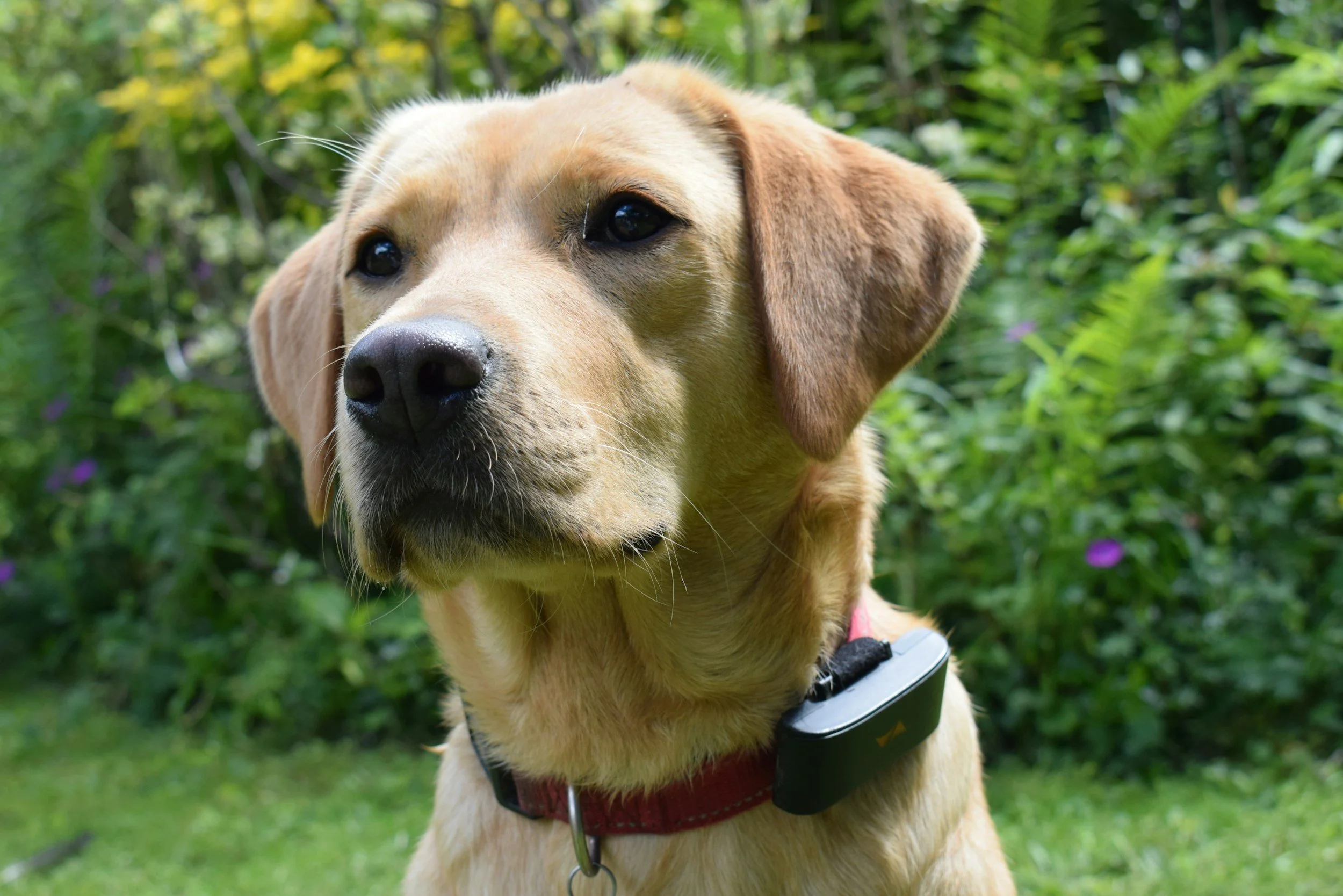
A tracker for your dog really can help you but will never replace good training and your relationship.
If you've ever worried about your dog running off, you've probably wondered whether an Apple AirTag could help—or whether it's worth spending more on a dedicated GPS tracker.
It's a question I hear regularly from dog owners.
The short answer?
Both have their place, but they're designed for very different jobs.
As a dog trainer, I see a tracker as a useful safety net—not a replacement for good recall training. Let's look at how the two compare.
How Does an Apple AirTag Work?
An Apple AirTag doesn't contain GPS.
Instead, it uses Apple's Find My network. Whenever an iPhone, iPad or Mac comes close to the AirTag, its location is anonymously updated and shared with the owner.
This works brilliantly in busy towns and cities where there are lots of Apple devices nearby.
However, in quieter countryside, forests or remote walking areas, there may be very few Apple devices to detect the AirTag, meaning updates can be delayed or unavailable.
How Does a GPS Dog Tracker Work?
A GPS dog tracker works much like satellite navigation.
It communicates with GPS satellites and usually sends its location over the mobile phone network directly to an app on your phone.
This allows you to see your dog's location in near real time, regardless of whether anyone else is nearby.
Many GPS trackers also include:
Live tracking
Safe-zone alerts (geofencing)
Escape notifications
Activity monitoring
Location history
Apple AirTag Pros
Relatively inexpensive.
No monthly subscription.
Small and lightweight.
Excellent in busy urban environments.
Long battery life (often around a year).
Apple AirTag Cons
Not designed specifically for tracking pets.
Doesn't provide live GPS tracking.
Can struggle in rural locations.
Relies on nearby Apple devices.
Location updates may be delayed.
GPS Tracker Pros
Live location tracking.
Designed specifically for dogs.
Works well in countryside and large open spaces.
Many include activity and health monitoring.
Faster recovery if your dog goes missing.
GPS Tracker Cons
More expensive to purchase.
Usually requires a monthly subscription.
Needs regular charging.
Slightly larger than an AirTag.
Which One Would I Recommend?
For most dog owners who regularly walk in parks, woodland or the countryside, I'd recommend a dedicated GPS tracker.
If your dog were to disappear over a hill or into woodland, being able to see their live location is incredibly valuable.
An AirTag can still be useful, particularly if:
Your walks are mainly in towns.
You want an inexpensive backup.
Your dog is unlikely to roam far before being spotted.
Don't Forget the Most Important Safety Tool
Whether you choose an AirTag or a GPS tracker, neither teaches your dog to come back when called.
A reliable recall is still your dog's greatest safety feature.
Using positive, reward-based training, you can build a recall that your dog genuinely enjoys responding to, reducing the chances you'll ever need to rely on technology.
Think of it like this:
A tracker helps you find your dog.
Recall training helps ensure they don't go missing in the first place.
My Verdict
If I had to choose just one for a dog that regularly enjoys off-lead adventures, I'd choose a dedicated GPS tracker every time.
They're built for the job, provide live tracking and offer considerably more reassurance if the unexpected happens.
An Apple AirTag can certainly add another layer of protection, particularly in built-up areas, but it shouldn't be viewed as an equivalent replacement for a true GPS tracker.
Whichever option you choose, pair it with consistent recall training, sensible management and a well-fitted collar or harness. Technology is a fantastic backup—but your relationship with your dog will always be your best safety tool.
If you'd like help building a reliable recall using kind, reward-based methods, I'd be delighted to help.