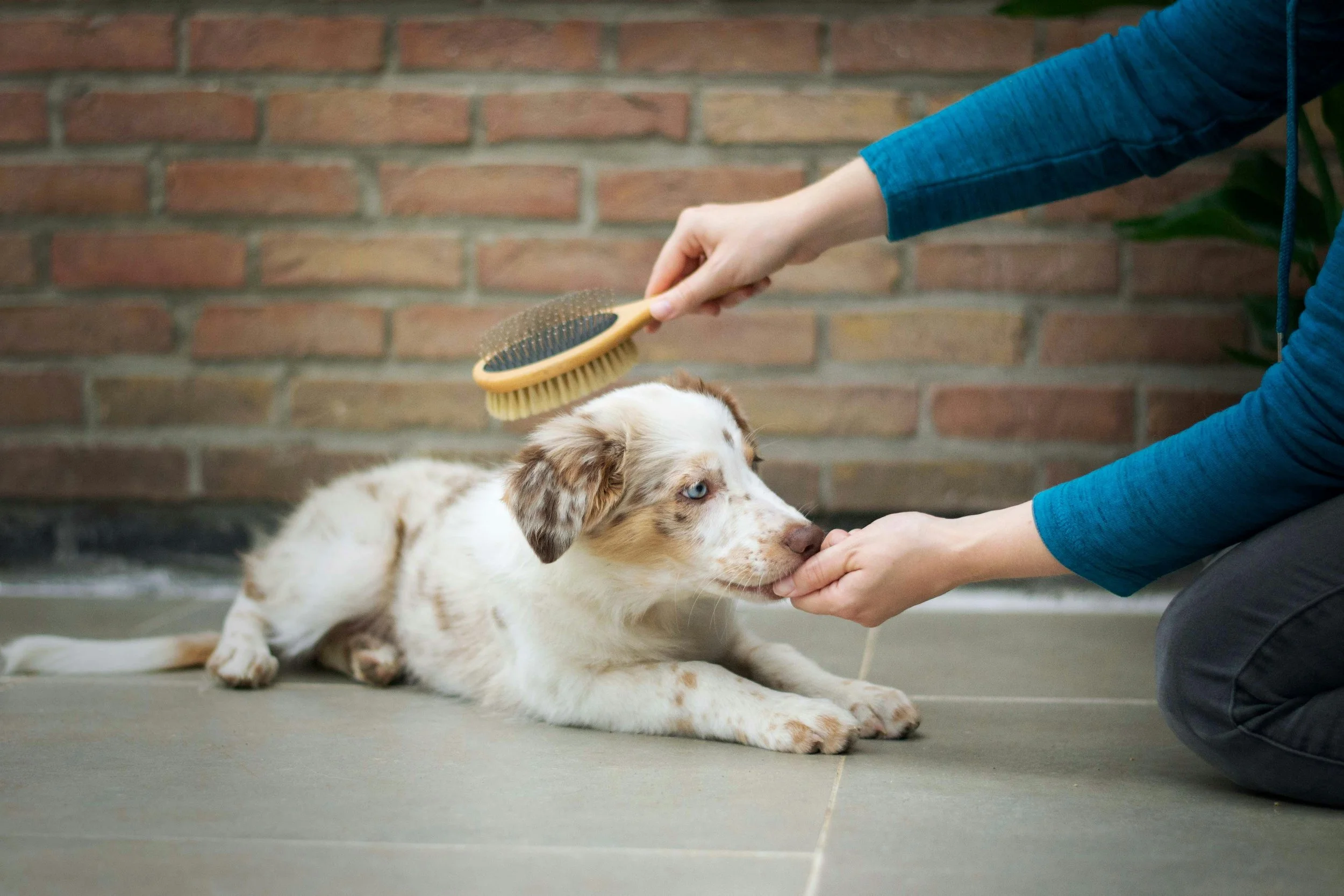
A brush may seem like an ordinary part of caring for a dog.
For the dog, it can mean unfamiliar pressure, a tool moving over sensitive skin or being held still when they would rather walk away. If your dog ducks, freezes, mouths the brush or leaves as soon as it appears, the answer is not to finish the whole coat more quickly. It is to make the experience easier to understand and safer to take part in.
Training for grooming is about comfort and cooperation, not a dog enduring something silently. A few short, positive sessions can create a much better starting point for the care they will need throughout life.
Check comfort before starting
First consider whether brushing may hurt. Mats can pull at the skin, a sore joint may make standing difficult and a sensitive area may need veterinary attention. If your dog has suddenly begun resisting touch or seems painful, speak to your vet. Do not try to train through pain.
Choose a brush suited to your dog's coat and ask a reputable groomer or vet for guidance if you are unsure. A tool that scratches or tugs will undo careful training. The aim is to prevent discomfort, not teach a dog to tolerate it.
Let the brush predict good things
Begin without touching the dog. Put the brush on the floor a comfortable distance away and give your dog a small reward for calmly noticing it. Pick it up, put it down and reward again. If your dog chooses to approach and sniff, allow that without moving the brush towards them.
Use food your dog enjoys, or another reward that genuinely matters to them. Keep the session short enough that the dog is still relaxed when it ends. This first stage may look simple, but it changes the brush from an unwanted surprise into something predictable.
Separate touch from brushing
Once the brush itself is unremarkable, practise a gentle hand touch on an area your dog already likes, perhaps the shoulder or side. Touch briefly, remove your hand and reward. Watch whether your dog stays soft and freely moves back towards you.
Then hold the brush near the same area without using it. Reward and put it away. Progress to one very light stroke, stop and reward. If that goes well, repeat another day before adding more. One comfortable stroke is worth more than a rushed ten-minute session that leaves your dog avoiding you.
Give your dog a way to say pause
Some owners use a simple station, such as a non-slip mat. The dog chooses to stand or sit there for a reward, and the brush is presented only while they remain comfortable. If they step off, you pause. You can invite them back, but do not force them onto the mat.
This does not mean every moment of grooming will be effortless. It does mean you are paying attention to the dog's choice and body language. A dog who can take a break is less likely to feel trapped by the process. That makes future care easier for both of you.
Notice the quiet signs of worry
Do not wait for a growl to decide that the session is too difficult. A dog may turn their head away, close their mouth, become very still, lick their lips, tense their body or repeatedly try to leave. Those signs are useful information. Stop, give space and return to an easier step next time.
Equally, a wagging tail alone does not tell you the dog is comfortable. Look at the whole dog: loose movement, normal breathing and a willingness to return are more helpful clues. Reward calm participation and finish while the dog is still able to choose it.
Add time and difficult areas gradually
When one stroke on the shoulder is easy, add a second stroke before the reward. Later, work on another comfortable patch of coat. Keep sensitive areas such as paws, ears, tail and belly for a separate, slower plan. Do not combine a new body area, longer session and unfamiliar tool on the same day.
A simple record can help. Note which brush you used, where you touched, how long the session lasted and what your dog did. If progress stalls, reduce the difficulty rather than pushing through. The dog's response tells you whether the plan is working.
Make everyday care manageable
Regular small sessions are often easier than leaving all grooming until the coat is tangled. Set up a quiet space with a non-slip surface, have rewards ready and keep other demands low. If another person is helping, agree who will offer rewards and who will handle the brush so the dog is not surrounded by hands.
For a dog with a long or high-maintenance coat, a groomer may still be essential. Tell them what your dog finds difficult and ask how you can prepare at home. Home training and professional grooming should support one another, not become competing experiences.
Know when to ask for support
If your dog snaps, panics, has severe matting or cannot tolerate necessary care, stop trying to solve it in a single session. Speak to your vet about possible pain and seek an appropriately qualified, reward-based trainer or experienced groomer for a tailored plan. Safety and welfare come before a neat coat.
Ready to take the next step?
If you're looking for friendly, reward-based dog training in Teddington, Twickenham, Richmond, Hampton, Kingston and the surrounding areas, I'd love to help or UK wide online.
Get in touch to discuss how we can build a happier, more confident relationship with your dog.
Choosing equipment
If you’re looking for leads, harnesses, calming products or anything else. Take a look at this page here where I’ve collated items for you.