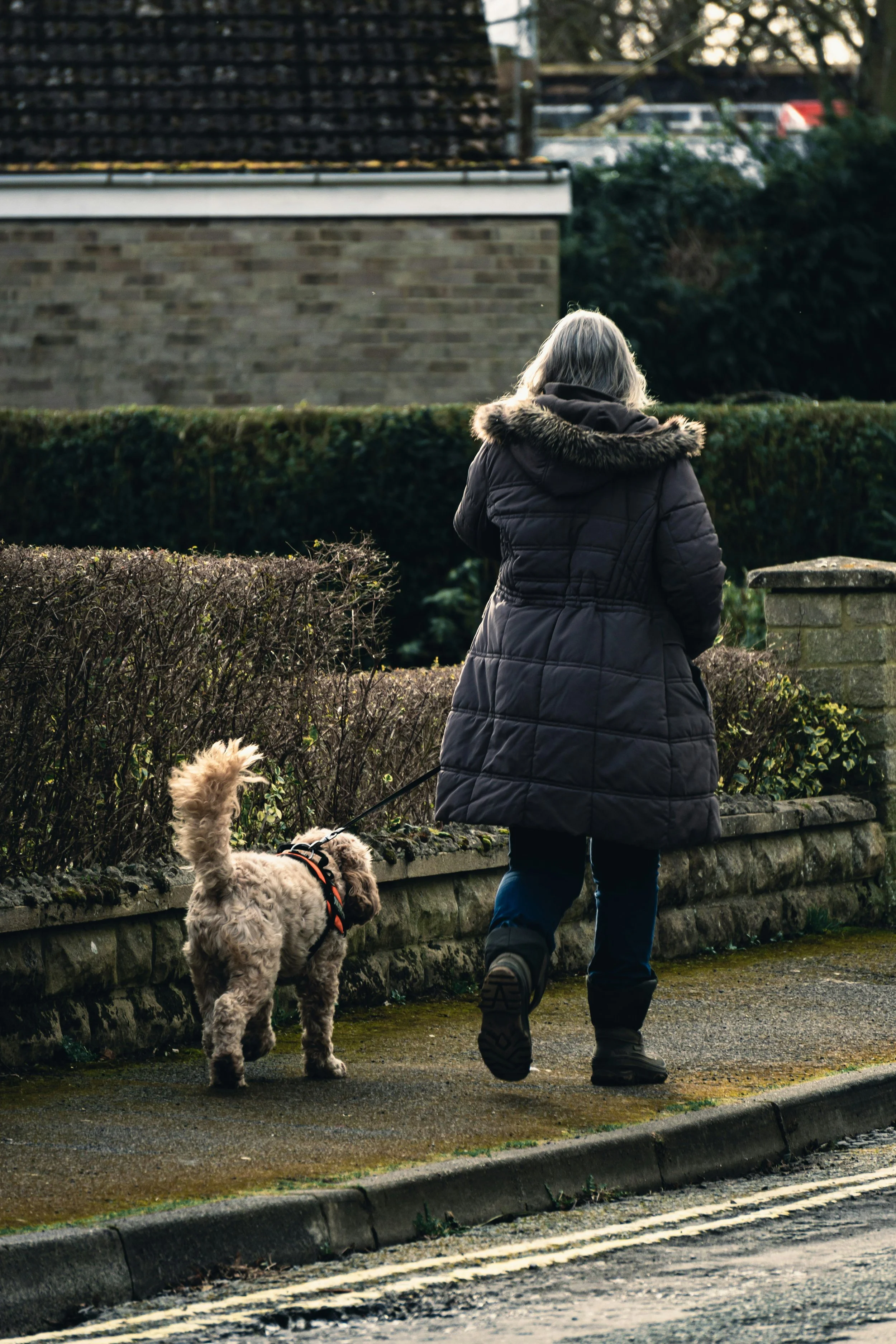
For some dogs, the everyday sights and sounds of a road are easy to ignore.
For others, traffic feels loud, unpredictable and much too close. A bus braking, a motorbike accelerating or a row of parked cars can turn an ordinary walk into something they want to escape.
This does not mean your dog is being difficult or that you need to push through until they “get used to it”. Confidence is more likely to grow when your dog is given manageable exposure, enough distance and a clear way to feel safe with you.
Notice the early signs
Traffic worries do not always look dramatic. A dog may slow down, pull towards home, scan constantly, stop taking food, hold their body tightly or try to cross away from the road. Some dogs bark or lunge because they feel overwhelmed; others become very quiet.
These are useful observations, not a reason to judge your dog. They tell you that the situation is currently harder than they can comfortably manage. The earlier you spot the signs, the easier it is to change the plan before your dog feels trapped.
Start at a distance that works
Distance is one of the kindest training tools you have. Choose a quieter street, a wider pavement, a green space beside a road or a time of day with fewer vehicles. Stand far enough away that your dog can notice traffic without becoming tense.
At that distance, calmly offer a treat, allow a sniff or simply stand together for a moment. The aim is not to make your dog stare at vehicles. It is to help them notice a sound or movement and then return their attention to something safe and ordinary.
If your dog cannot eat, cannot sniff or is desperately trying to leave, increase the distance. That is not a setback. It is good information about where learning can happen.
Let the walk be smaller for a while
When a route is difficult, many owners feel they must complete the usual walk anyway. In reality, a shorter walk with more choice can be much more useful than a long walk spent in a state of worry.
For a few days, choose quieter loops, use familiar routes and give your dog time to investigate. You can meet their exercise and enrichment needs in other ways too: a sniffy garden session, food scatter, simple training game or a visit to a calmer green space. This reduces the pressure on the roadside training itself.
Build a simple check-in habit
Practise a small, reliable behaviour away from traffic first. It might be your dog looking at you when you say their name, touching your hand or turning with you for a few steps. Reward it generously in a quiet environment.
Then use the same familiar pattern at a comfortable distance from a road. A vehicle passes, you pause, your dog checks in and you reward. This is not about demanding attention every second; it is about giving your dog a predictable option when something feels uncertain.
Avoid forcing a close encounter
Dragging a worried dog nearer to a busy junction or holding them still while traffic passes can make their concern stronger. It removes their ability to create distance and may teach them that the road predicts unpleasant handling as well as noise.
Instead, move away early, cross where it is safe, turn into a quieter side street or let your dog watch from farther back. You can return to the challenge in smaller pieces later. Choice is not the same as letting a dog dictate every route; it is a way of helping them remain under their threshold so they can learn.
Make journeys predictable
Dogs often feel safer when the human end of the lead is calm and clear. Keep equipment comfortable and well fitted. Avoid sudden lead corrections. Give yourself enough time so you are not rushing across roads or becoming frustrated when your dog needs a pause.
If you know a particular bin lorry, school-run period or busy road is likely to be difficult, plan around it when you can. This is sensible management, especially while confidence is being built.
Keep a note of progress
Progress around traffic is not always a straight line. One day may be easy and the next may feel harder because the road is busier, the weather has changed or your dog has had a demanding day already. A short note can help you see patterns: the distance that worked, the type of vehicle, whether food was accepted and how quickly your dog relaxed afterwards.
That information makes it easier to make the next session a little more achievable. It also stops you judging progress only by whether your dog can already walk beside the busiest road in the area.
When to seek extra support
If your dog is panicking, trying to escape, reacting strongly or if you are worried about safety, seek help from an appropriately qualified, reward-based professional. Sudden changes in behaviour can also be worth discussing with your vet, particularly if pain, hearing changes or illness may be involved.
For kind, tailored support with walks, confidence and everyday behaviour in Richmond, Teddington and nearby areas, I offer one-to-one training that works with the dog and environment in front of us. The goal is not to make your dog love every road. It is to help them feel safer and give you a practical plan for getting out together.
Choosing equipment
If you’re looking for leads, harnesses, calming products or anything else. Take a look at this page here where I’ve collated items for you.
Ready to take the next step?
If you're looking for friendly, reward-based dog training in Teddington, Twickenham, Richmond, Hampton, Kingston and the surrounding areas, I'd love to help or UK wide online.
Get in touch to discuss how we can build a happier, more confident relationship with your dog.