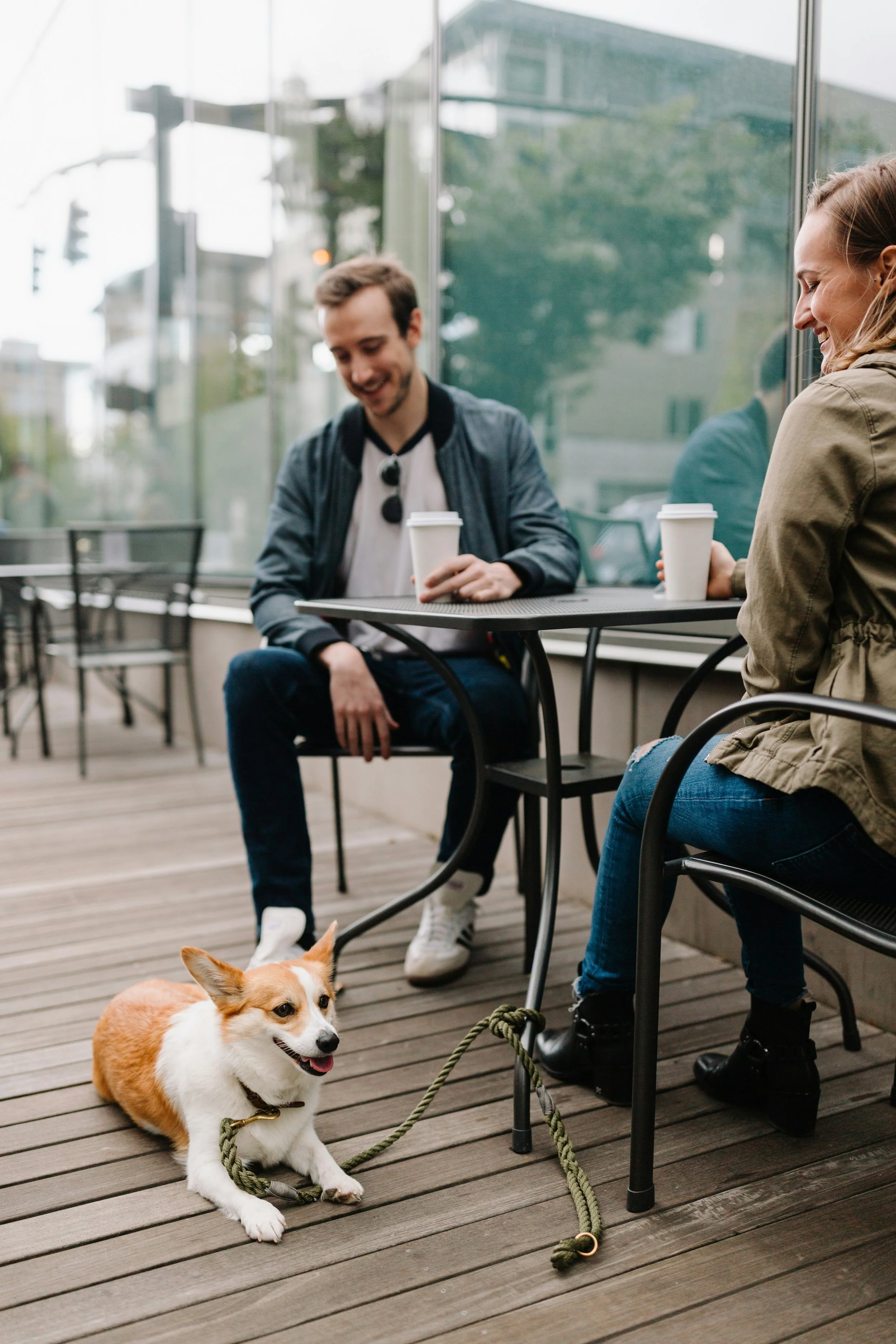
A café visit is optional, not a test
A relaxed dog sitting beside an owner at a café can look like the easiest thing in the world. What we do not see is the preparation behind it: short visits, suitable timing and a dog who has been given the choice to settle. Not every dog enjoys cafés, and they do not need to in order to have a good life.
For a dog who is comfortable with people, new places and everyday noises, a brief café visit can be a useful practice opportunity. The goal is not to make your dog perform calmness for other people. It is to help them feel safe enough to rest while ordinary life happens around them.
Practise the settle at home first
Before expecting your dog to lie quietly beside a table outdoors, practise a simple settle in an easier place. Choose a mat, blanket or bed that is comfortable and easy to carry. At home, reward your dog for choosing to lie on it, shifting into a relaxed position and staying there for short moments.
Keep the sessions light. You are building a positive association with the mat, not asking for a long, formal stay. If your dog gets up, that is information. Make the next attempt easier, reward the choice to return and avoid turning the mat into a place they feel trapped.
Choose the right first venue
Your first venue matters. A quiet outdoor table at an off-peak time is often much easier than a busy indoor café with close tables, dropped food, children moving around and several dogs passing by. Look for a space with room to step away if needed.
Think about the route there too. If the walk has already been exciting or difficult, your dog may not have much capacity left for a new environment. A calm arrival is more useful than squeezing the visit into the end of a busy day.
Keep the first visit very short
The best first visit may only last five or ten minutes. Bring water, a few small treats and the familiar mat. Sit down, allow your dog to look around, reward calm choices and leave while they are still coping well. Ending early is not a failure; it is what helps the next visit feel predictable.
There is no need to persuade a dog to greet people or other dogs. A dog resting quietly beside you is doing exactly what you came to practise. Let strangers know you are training if you need a little space.
Watch for signs that it is too much
A dog who is comfortable may sniff, look around, take a treat, lie down or simply settle beside you. A dog who is finding it difficult may scan constantly, pant when they are not warm, pull towards the exit, refuse familiar food or be unable to pause. These are reasons to reduce the pressure, not to keep waiting for them to “get used to it”.
Create distance, move to a quieter area or leave. A successful training session is one in which the dog learns that you will notice and respond to their needs.
Manage food and other people
Cafés come with tempting distractions: dropped food, chairs scraping, people wanting to say hello and other dogs passing close by. Keep your dog near you on a comfortable lead, but avoid holding the lead so tightly that they cannot adjust their position. If food is likely to be a problem, choose a table with more space or save the café visit for another stage of training.
You can politely say, “We are practising a calm settle today, so please give us a little space.” Most people are happy to help when they understand what you are trying to achieve.
Build gradually and keep it kind
As your dog gains confidence, you can vary one thing at a time: a slightly busier period, a different table or a few extra minutes. Do not increase everything together. A dog who copes beautifully on a quiet Tuesday morning may find a Saturday lunchtime visit much harder.
Progress is not measured by how long you can stay. It is measured by how well your dog can relax, recover and choose to be with you in that setting. Sometimes the kindest result is deciding that cafés are not your dog’s favourite activity.
Give your dog a simple exit plan
Before you sit down, decide how you will leave if your dog needs a break. It might be a quiet path, a short loop around the block or simply returning home. Knowing this in advance helps you act calmly rather than feeling embarrassed or stuck.
Bring only what you need and keep expectations low. A comfortable dog may settle for a few minutes, then choose to stand up and leave. That is not a behaviour to correct. It is useful communication. When owners respond early and kindly, dogs learn that unfamiliar places are manageable because they do not have to endure them alone.
Need help with real-world calm?
If public outings feel stressful, one-to-one training can make it easier to work at the right level for your dog. We can begin with settling at home, choose suitable local environments and build confidence without rushing.
I offer kind, reward-based dog and puppy training across Richmond, Teddington and nearby areas. Get in touch if you would like tailored support with calm behaviour, walks or everyday outings.
Choosing equipment
If you’re looking for leads, harnesses, calming products or anything else. Take a look at this page here where I’ve collated items for you.
Need help with real-world calm?
If public outings feel stressful, one-to-one training can make it easier to work at the right level for your dog. We can begin with settling at home, choose suitable local environments and build confidence without rushing.
I offer kind, reward-based dog and puppy training across Richmond, Teddington and nearby areas. Get in touch if you would like tailored support with calm behaviour, walks or everyday outings.
Ready to take the next step?
If you're looking for friendly, reward-based dog training in Teddington, Twickenham, Richmond, Hampton, Kingston and the surrounding areas, I'd love to help or UK wide online.
Get in touch to discuss how we can build a happier, more confident relationship with your dog.