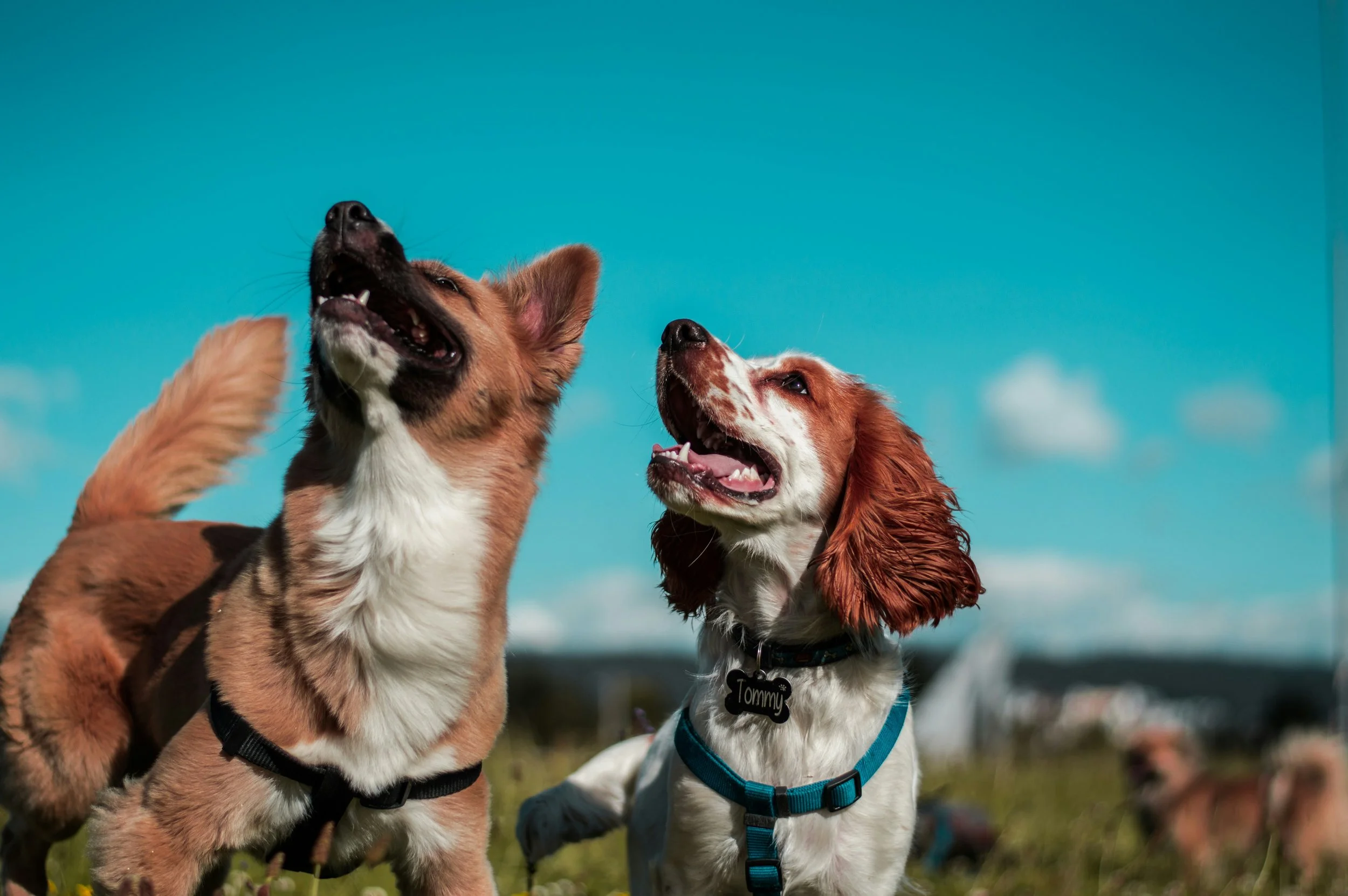
A calm introduction starts with space
Introducing two dogs is often described as a quick moment: let them meet, let them sniff, then see how they get on. In practice, the best introductions are usually quieter and less direct than that.
The aim is not to force friendship. It is to give both dogs enough space and information to feel comfortable.
Choose the right place and time
Before arranging the meeting, consider both dogs’ history, age, health and usual comfort around other dogs. A dog who is recovering from illness, protecting a resource or already highly aroused is not being given the best conditions for a first introduction.
Choose a neutral, open place where neither dog feels crowded. A quieter time and location are part of the training plan, not an afterthought.
Watch the whole dog
Watch the whole dog, not just the tail. Soft movement, curved approaches, easy sniffing and a willingness to move away can all suggest comfort.
A stiff body, fixed stare, repeated attempts to create distance or a dog that cannot settle are all reasons to slow down and make more space. There is no prize for making an introduction happen quickly.
Keep greetings short and curved
If both dogs look comfortable, allow a brief, curved approach. Keep it short, then move on again. These small breaks can stop one dog feeling trapped or overwhelmed.
Avoid tightening the lead unless you need to create safety. Tension can travel down the lead and make the moment feel more pressured than it needs to be.
Keep the first meeting simple
Keep the environment simple, give both dogs a choice about distance and let the owners focus on calm movement rather than trying to make the moment look sociable.
If the dogs will share a home
If the dogs will be living together, make the first indoor session brief and managed. Put away high-value items, provide separate resting spaces and continue to supervise.
A good outdoor meeting is helpful, but it is not a guarantee that every situation indoors will be straightforward. Let the dogs build familiarity gradually.
Calm coexistence is a success
Not every dog wants a close canine friendship, and that is fine. Calm coexistence on a walk can be a very good outcome.
If either dog shows fear, persistent tension or behaviour that worries you, create distance and seek qualified support. Choosing not to continue is often the kindest decision. A successful introduction is one in which both dogs feel safe, not one in which they are made to interact.
Choosing equipment
If you’re looking for leads, harnesses, calming products or anything else. Take a look at this page here where I’ve collated items for you.
Ready to take the next step?
If you're looking for friendly, reward-based dog training in Teddington, Twickenham, Richmond, Hampton, Kingston and the surrounding areas, I'd love to help or UK wide online.
Get in touch to discuss how we can build a happier, more confident relationship with your dog.