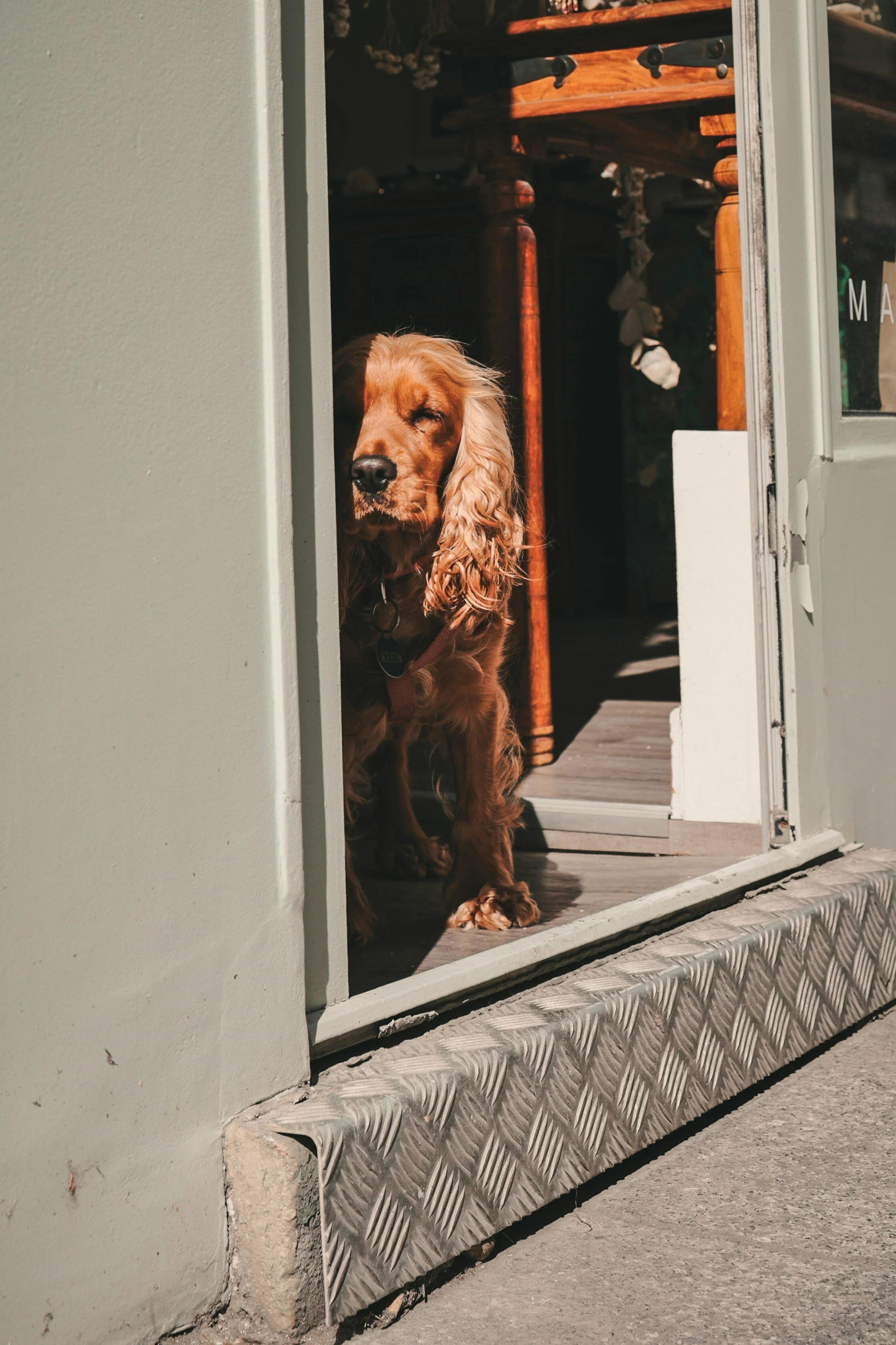
The doorbell rings, someone steps inside and your dog suddenly seems to have twice as much energy. They may bark, jump up, spin, race to the door or find it impossible to settle once the visitor is in the room.
This is very common. It does not mean your dog is being “naughty”, and it does not mean you have failed. Visitors bring noise, movement, unfamiliar smells and excitement. For many dogs, that is a lot to process all at once.
Start by lowering the pressure
The first goal is not a perfect greeting. It is to make the arrival easier to manage. If your dog is already overwhelmed at the front door, expecting them to greet someone calmly is asking a lot.
Before a visitor arrives, set up a little space. This might be a baby gate, a comfortable bed or a separate room with something appropriate to chew. The purpose is not to shut your dog away as a punishment. It is to give everyone a calmer starting point.
Practise the skills before you need them
A calm greeting is made up of smaller skills. Your dog needs to be able to settle on a mat, turn towards you when you say their name, and take a treat without becoming more excited. Those are easier to teach when the house is quiet.
Spend a few minutes each day rewarding your dog for choosing their bed or mat. Give them a treat calmly between their paws. Build the idea that this is a good, safe place to be - not somewhere they are sent when fun is happening elsewhere.
Use distance as a training tool
When a visitor arrives, begin far enough away that your dog can still listen and eat. If they are barking, pulling or unable to take food, the situation is probably too difficult at that distance. Create more space and let the excitement come down before asking for anything else.
Your visitor can help by coming in quietly, avoiding direct eye contact at first and allowing the dog to choose whether to approach. There is no rule that says every dog needs to greet every guest immediately.
Reward the behaviour you want to see
Look for the small moments: four paws on the floor, a glance back at you, a pause in barking, a choice to go to the mat. Mark those moments with a calm “good” and a treat. This teaches your dog that calm behaviour works.
Try not to rely on repeated telling-off. For many dogs, loud voices and lots of movement only add to the excitement. Clear management and timely rewards are far more useful.
Keep the first greetings short
If your dog can manage a few calm seconds, that is a good start. Allow a brief hello only when they are settled enough, then bring them back to their mat or give them a quiet break. Short successful repetitions are more valuable than one long, chaotic greeting.
When to ask for help
If your dog’s visitor behaviour is getting worse, feels unsafe, includes fear or aggression, or is difficult for you to manage physically, get appropriate professional support. A reward-based trainer can help you make a plan for your home, your dog and the situations you actually face.
The aim is not to make your dog ignore visitors. It is to help them feel safe enough to make calmer choices.
If you're looking for friendly, reward-based dog training in Teddington, Twickenham, Richmond, Hampton, Kingston and the surrounding areas, I'd love to help or UK wide online.
Get in touch to discuss how we can build a happier, more confident relationship with your dog.