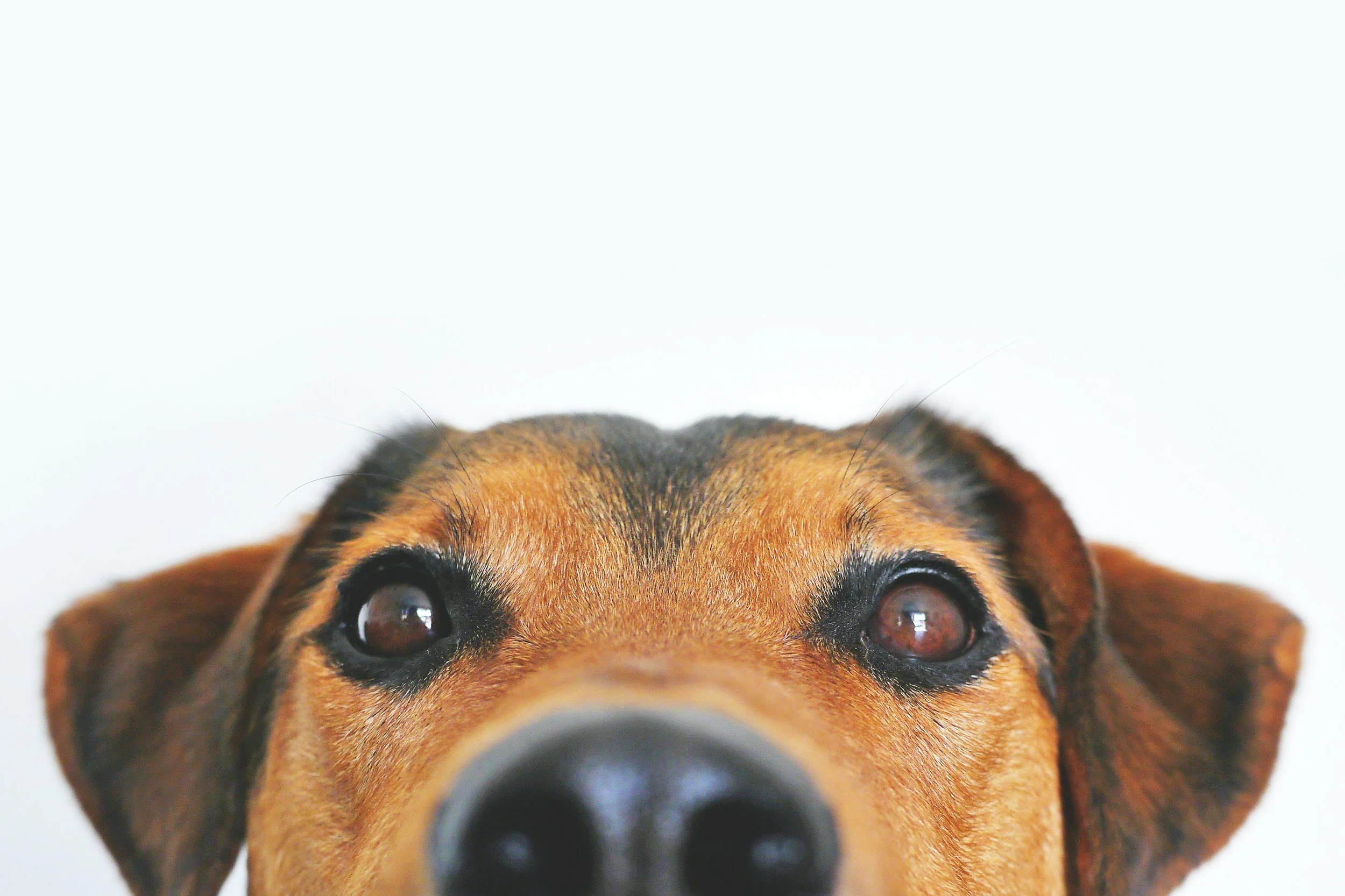
Eye contact is a great and rewarding foundational exercise.
When owners begin training their dog, it is natural to focus on the finished behaviour.
You want your dog to come back when called, walk calmly on the lead, ignore distractions and listen when it matters.
The difficulty is that reliable behaviour rarely appears in one big leap. It is usually built through a series of smaller, carefully taught steps.
Good dog training is not about asking for everything at once. It is about creating clear foundations, helping the dog understand what is being asked, and gradually making the exercise more challenging.
This methodical approach can feel slower at first, but it often produces better, more dependable results.
Attention Comes Before Instruction
Before you can ask your dog to do something, you first need their attention.
This is why eye contact is such a useful foundation exercise.
Teaching your dog to look at you helps create a moment of connection. It gives you a way to bring their focus back before asking for another behaviour.
That might be:
Coming back when called
Walking beside you
Waiting at a doorway
Moving away from another dog
Settling on a mat
Listening around distractions
Eye contact is not about making your dog stare at you constantly. It is about teaching them that checking in with you is worthwhile.
Once your dog regularly chooses to look towards you, you have a stronger starting point for almost every other exercise.
Build the Behaviour Before Testing It
Recall is a good example of why foundations matter.
Many owners call their dog when the dog is already distracted, playing, sniffing or running towards something exciting. If the dog does not return, it can feel as though they are being stubborn or ignoring the owner.
In reality, the dog may not yet understand the recall cue well enough to respond in that situation.
A reliable recall should first be taught somewhere easy.
Start indoors or in the garden, where there are fewer distractions. Reward the dog generously for returning and make the experience positive.
Once the dog understands the basic behaviour, you can gradually introduce more distance and more challenging environments.
The same principle applies when introducing a whistle.
Why Use a Whistle for Recall?
A whistle can become a very effective recall cue because it produces a clear, consistent sound.
Your voice may change depending on whether you are calm, worried, frustrated or excited. A whistle sounds the same each time.
However, the whistle is not automatically meaningful to the dog.
It needs to be carefully introduced and associated with something positive.
At first, the whistle can be used when the dog is already close and likely to return. Blow the whistle, encourage the dog towards you and reward them when they arrive.
Over time, the dog begins to understand that the whistle means:
“Return to my person and something good will happen.”
The whistle should become reliable in easy situations before it is used around major distractions.
Blowing it for the first time when your dog is chasing a squirrel is unlikely to produce the result you want.
Change One Difficulty at a Time
Most training exercises become more difficult in three main ways:
Distance
Duration
Distraction
Problems often arise when all three are increased together.
For example, an owner may ask their dog to stay for longer, while standing further away, in a busy park.
That is a much harder task than practising a short stay at home with the owner close by.
A better approach is to increase one element at a time.
You might:
Increase the distance slightly while keeping the duration short
Increase the duration while remaining close
Introduce a mild distraction while keeping everything else easy
This helps the dog understand what is expected and gives them a much better chance of succeeding.
Do Not Overload Your Dog
Dogs can become overwhelmed when too much is asked of them at once.
This does not always look dramatic.
An overloaded dog may:
Stop responding
Begin sniffing the ground
Wander away
Offer random behaviours
Become overexcited
Start jumping or mouthing
Appear distracted
Lose interest in food
Become slow or hesitant
These behaviours are not necessarily signs that the dog is refusing to cooperate.
They may be signs that the exercise is too difficult, the environment is too distracting, or the session has gone on for too long.
When this happens, make the task easier.
Move somewhere quieter, reduce the distance, shorten the exercise or return to a behaviour the dog already understands.
Training should stretch the dog gently, not overwhelm them.
Short Sessions Often Work Best
Long training sessions are not always more effective.
A few minutes of calm, focused practice can be more valuable than a lengthy session where both dog and owner become frustrated.
Try adding short exercises into everyday life.
You could practise eye contact:
Before putting the food bowl down
Before opening the front door
Before clipping on the lead
Before throwing a toy
Before allowing the dog to greet someone
These moments help make training part of normal life rather than something that only happens during a formal session.
Reward the Small Steps
Owners often wait for the complete behaviour before rewarding the dog.
However, rewarding small improvements can help the dog learn more quickly.
For example, if you are teaching eye contact, you might initially reward your dog simply for glancing towards your face.
As the behaviour becomes stronger, you can gradually wait for slightly longer eye contact before rewarding.
If you are teaching recall, reward the dog for turning towards you, moving in your direction and arriving close enough for you to gently hold their harness or collar.
Each successful step helps build the finished behaviour.
Set Your Dog Up to Succeed
Effective training should give the dog plenty of opportunities to get things right.
This means choosing an environment where they can concentrate, using rewards they value and keeping expectations realistic.
If your dog succeeds repeatedly, the behaviour becomes stronger.
If they regularly fail, the exercise may be too difficult.
Reducing the difficulty is not taking a step backwards. It is helping your dog understand what you want before moving forward again.
Strong Foundations Create Real-Life Reliability
Eye contact, calm focus and a carefully introduced recall whistle may seem like simple exercises.
However, these foundations can support many important real-life behaviours.
They help your dog learn to check in with you, respond to clear cues and remain connected even as the world becomes more distracting.
The aim is not instant perfection.
The aim is steady progress.
By teaching one step at a time, rewarding success and avoiding unnecessary overload, you can build behaviour that is clearer, stronger and more reliable.
Need Help with Focus or Recall?
If you're looking for friendly, reward-based dog training in Teddington, Twickenham, Richmond, Hampton, Kingston and the surrounding areas, I'd love to help or UK wide online.
Get in touch to discuss how we can build a happier, more confident relationship with your dog.