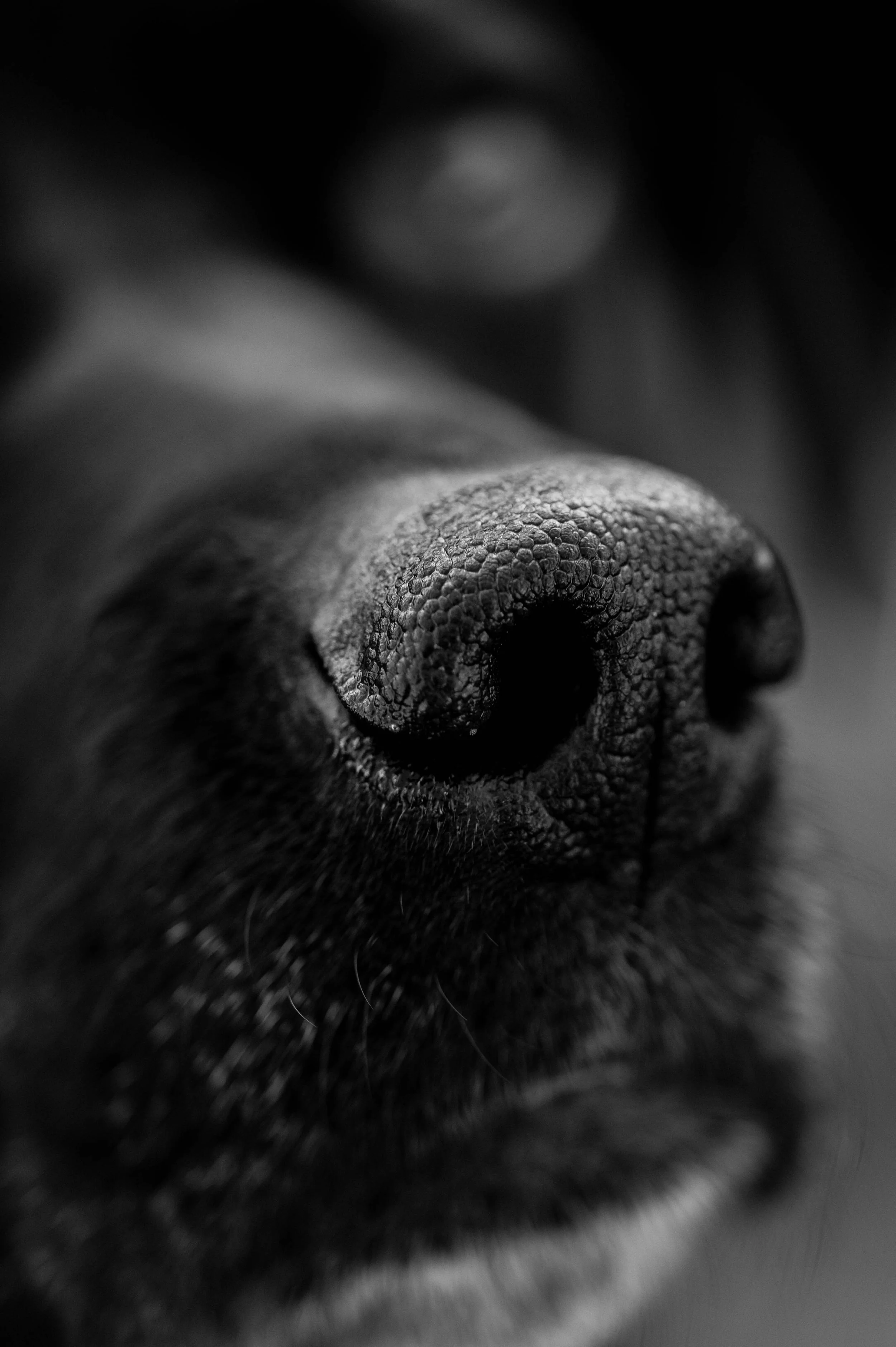
The walk does not have to be a march
If your dog pulls from one smell to the next, it can be tempting to keep the walk moving and treat every pause as a distraction. I understand the feeling, particularly when you are short of time or trying to practise loose lead walking. But sniffing is one of the main ways dogs take in information about the world. A walk that includes time to sniff can feel more satisfying than one that simply covers a distance.
The aim is not to hand over the entire walk or abandon lead skills. It is to build a rhythm where your dog has clear opportunities to investigate, and you still have moments of calm connection and direction. For many dogs, that balance makes the outing easier rather than harder.
Choose calm places for the first sniff breaks
Start somewhere quiet, where you are not trying to manage busy roads, dogs passing close by or a very exciting destination. Let your dog explore a patch of grass or the base of a tree on a loose lead. There is no need to hurry the first few seconds. Watch the lead, their body language and your own breathing. You are looking for a settled, unpressured moment.
Then say a simple cue such as ‘let’s go’, move on for a short stretch and reward your dog for coming with you. The reward may be a treat, praise, movement towards something pleasant or, often, the chance to have another sniff. This teaches that walking with you does not mean the interesting parts of the world disappear.
Use sniffing as information, not a test
A dog who is sniffing intensely may be curious, excited or simply enjoying the environment. It is not automatically a sign that they are being difficult or ignoring you. Equally, if your dog suddenly cannot disengage from every scent, becomes very tense or seems overwhelmed, it is worth reducing the difficulty of the walk. Distance, quieter routes and shorter outings can all help.
Avoid turning a sniff break into a repeated recall test. If you call your dog away every few seconds, the cue can become less meaningful and the walk becomes frustrating for both of you. Instead, choose natural transition points and make moving on worth their while. Small, successful repetitions build far more than a battle over the lead.
Keep safety and individual needs first
Sniff breaks are not appropriate in every spot. Keep your dog away from traffic, unknown food, broken glass, wildlife-sensitive areas and anything you know they try to eat. If your dog has a medical issue, suddenly changes behaviour or has a history of serious reactivity, speak to your vet and seek appropriately qualified support. Training advice needs to fit the dog in front of you.
For a puppy, a few quiet sniffing opportunities can be a gentle way to experience the world without piling on stimulation. For an adult dog, the same habit can add variety to a familiar route. The key is to notice what helps your particular dog stay comfortable, rather than following a rule that someone else says should work.
Choosing equipment
If you’re looking for leads, harnesses, calming products or anything else. Take a look at this page here where I’ve collated items for you.
A more shared sort of walk
Try adding three deliberate sniff breaks to your next familiar walk. Keep them predictable at first: one near the start, one halfway through and one before heading home. Between them, practise just a few steps of comfortable loose-lead walking. You may find that the walk feels less like a contest and more like something you are doing together.
If walks with your dog still feel stressful, you do not have to solve it alone…
If you're looking for friendly, reward-based dog training in Teddington, Twickenham, Richmond, Hampton, Kingston and the surrounding areas, I'd love to help or UK wide online.
Get in touch to discuss how we can build a happier, more confident relationship with your dog.