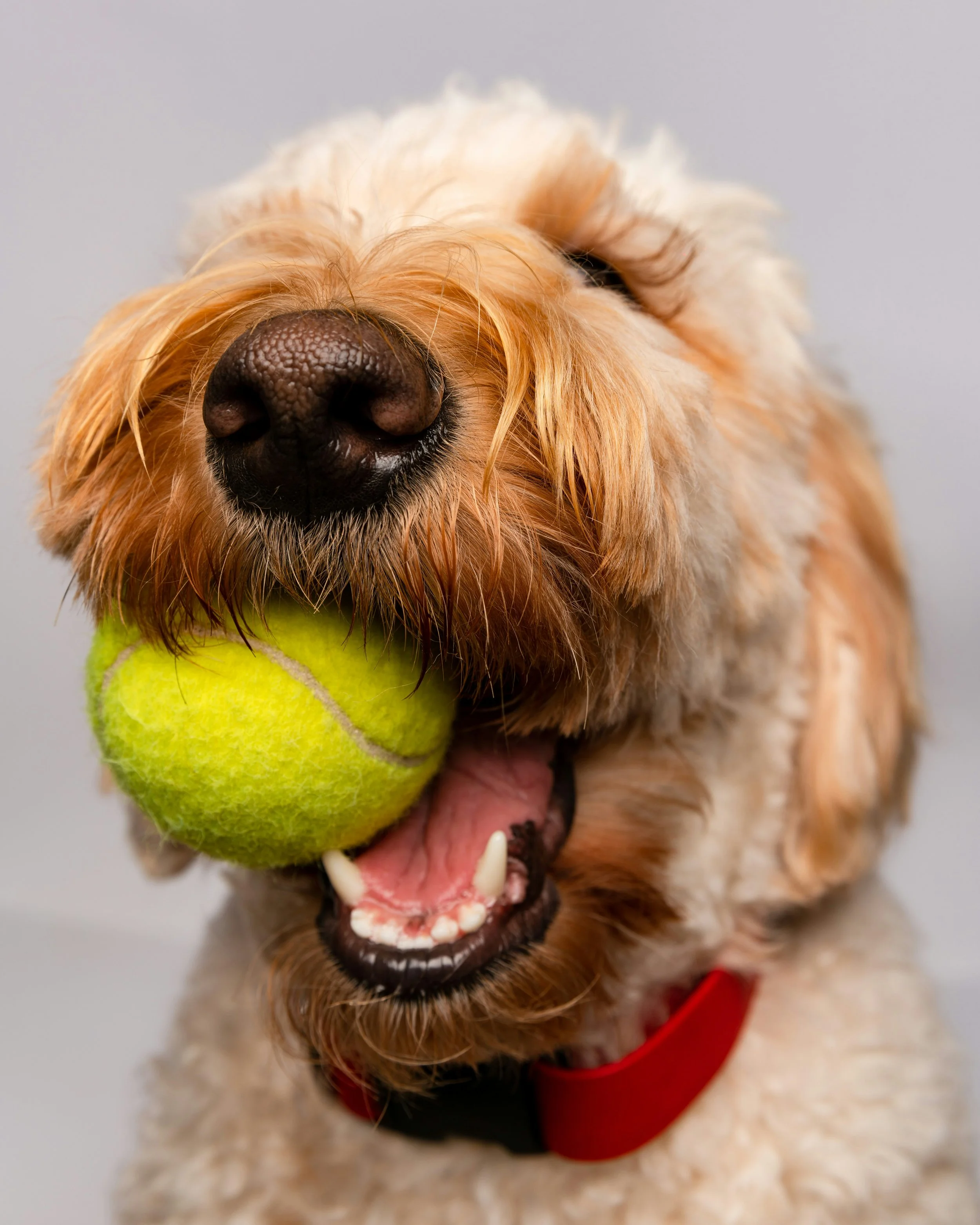
Why “drop” is worth teaching
A dog who races after a tennis ball then runs away with it is not being awkward. They may simply have learned that holding on keeps the game going, while giving it back ends the fun. For some dogs, being approached also predicts that a prized item will be taken away. A good “drop” cue changes that picture. It teaches your dog that releasing something is safe and that you may offer another reward, another toy or another turn of the game. That makes play easier, but it can also be a useful everyday skill when your dog has picked up something you would rather they did not have.
Start away from the exciting game
Begin indoors or in a quiet garden with a low-value toy, not the tennis ball that sends your dog into overdrive. Let them take the toy, then show a small treat close to their nose.
The moment they open their mouth and the toy falls, say a calm marker such as “yes”, give the treat and return the toy.
Returning the toy is important. It shows your dog that letting go does not always mean losing out. Repeat only a few times, then stop while it is easy. If your dog is not interested in the treat, the toy may be too exciting or the environment may be too busy. Make the first version simpler.
Add the word after the action is familiar
When your dog is reliably releasing the toy in response to the treat, say “drop” just before you present it.
Over a number of short repetitions, the word begins to predict the exchange. Keep your voice ordinary. There is no need to make the cue dramatic or repeat it several times.
Give your dog a moment to process it. As they understand the pattern, pause briefly after the word before showing the treat. If they release, reward warmly and give the toy back. If they do not, go back a step. The aim is a clear, positive habit, not a test they can fail.
Keep the game safe and suited to your dog
Tennis balls can be useful toys, but they are not suitable for every dog or every style of play. Choose a ball size your dog cannot swallow, supervise play and avoid repeated high-impact throws for a dog who is tired, very young or has a physical concern. If your dog guards items, freezes, growls or has previously bitten when approached, do not try to solve the issue by taking things away more firmly. Give them space and seek appropriately qualified, reward-based professional advice; for pain or sudden changes in behaviour, speak to your vet. A reliable drop is built through trust, not a contest of wills.
Take the skill into real life gradually
Once “drop” is easy in a quiet setting, practise with different safe toys and in slightly busier places. Keep the reward worthwhile and the sessions short. You can gradually use the cue before a ball throw, at the end of a tug game or when your dog has a permitted item you want to move. The cue becomes most reliable when it has a long history of good outcomes. If you are in Richmond, Teddington, Twickenham, Kingston or nearby and would like kind, one-to-one support with play, recall or everyday manners, I would be pleased to help.
Choosing equipment
If you’re looking for leads, harnesses, calming products or anything else. Take a look at this page here where I’ve collated items for you.
Ready to take the next step?
If you're looking for friendly, reward-based dog training in Teddington, Twickenham, Richmond, Hampton, Kingston and the surrounding areas, I'd love to help or UK wide online.
Get in touch to discuss how we can build a happier, more confident relationship with your dog.