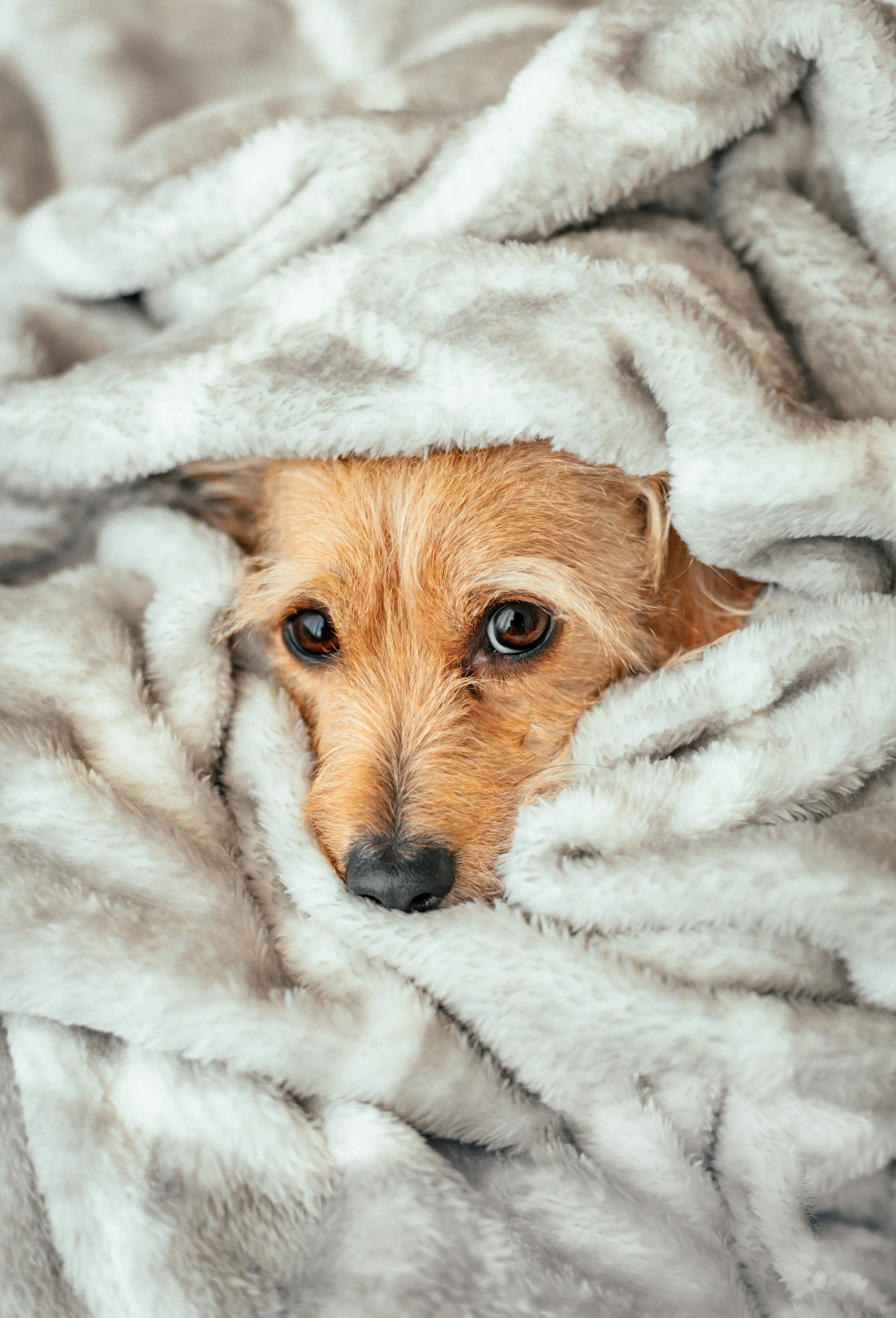
Fireworks can be difficult for dogs…
because the sounds are sudden, unpredictable and often accompanied by flashes and vibration.
A dog who coped last year may react differently this time, and a young dog’s first experience can shape how future events feel.
The most useful preparation happens before the first loud evening. You cannot promise that a dog will feel no fear, but you can reduce avoidable pressure, improve safety and make support easier to access.
Find out when fireworks are likely
Check the dates of nearby public displays and ask neighbours whether they are planning fireworks. Bonfire Night may be the obvious focus, but events can continue across several evenings and overlap with other celebrations.
Arrange for you, or someone your dog knows well, to be at home during the most likely periods. Move walks, meals and toilet breaks earlier so you are not forced into a difficult outing after dark.
Check identification and physical security
Make sure your dog’s microchip details are current and their tag is correct. Inspect doors, windows, gates and fences. A frightened dog may push through a weakness they normally ignore.
Use a well-fitted collar or harness and lead for walks, even if your dog is usually reliable. Avoid letting them into an unsecured garden while fireworks may begin. These precautions are management, not a judgement on training.
Create a safe area before it is needed
Choose a quiet part of the home where your dog already likes to rest. It might be a covered crate with the door open, a bed behind furniture or a familiar corner with blankets. The dog should be able to enter and leave freely.
Introduce the area on ordinary calm days. Place familiar bedding there and occasionally offer a chew, scatter of food or quiet company if your dog enjoys those things. Do not wait for a firework and then shut the dog into an unfamiliar den.
Some dogs hide; others want to stay close to a person. Both can be reasonable coping choices. Your preparation should create options rather than insisting on one correct place.
Reduce noise and flashes
Before darkness, close windows and curtains. Blackout blinds can reduce flashes, while music, television, a fan or white noise may soften the contrast between quiet and sudden bangs.
Test background sound in advance at a comfortable level. It should not become another overwhelming noise. Move the dog’s resting area away from windows where possible, and keep internal doors arranged so they cannot bolt towards an outside exit.
Keep the day predictable
Offer exercise and opportunities to sniff during daylight, at a level suitable for your dog. Feed earlier if anxiety normally affects appetite. Give enough time for toileting before noise is likely.
Avoid deliberately exhausting the dog in the hope that they will sleep through fireworks. Extreme exercise can add physical stress. The goal is a familiar, manageable day with fewer surprises.
Let your dog choose contact
You will not reinforce fear by offering calm comfort. If your dog seeks closeness and gentle contact helps them, stay nearby. If they hide or move away, do not pull them out or insist on cuddling.
Keep your own movements and voice steady. It is fine to respond to the dog; you do not need to ignore them. Watch what actually helps: some dogs can eat or play, while others need space and reduced demands.
Recognise less obvious signs of stress
Panting when the room is cool, trembling, pacing, drooling, repeated yawning, refusing food, scanning the ceiling, hiding, barking or trying to escape can all be relevant. A dog may also become unusually still.
Notice recovery as well as reaction. If the dog remains distressed long after a sound, cannot settle between events or stops eating and toileting normally, they may need more support than household adjustments alone.
Do not start sound training at full volume
Carefully planned desensitisation can help some dogs, but it should begin well before fireworks season and at a volume that causes no fear. Pair very quiet recordings with something the dog enjoys, increase difficulty gradually and stop if the dog shows concern.
Playing loud firework sounds to prove they are safe can make fear worse. If your dog already has a significant noise fear, ask your vet or an appropriately qualified clinical animal behaviourist for a plan rather than experimenting close to the event.
Speak to your vet early
Contact your vet before the busiest fireworks period if your dog has previously panicked, attempted to escape, injured themselves, remained distressed for hours or shown worsening noise sensitivity. Medical support may be appropriate, and it needs professional assessment and timing.
Do not give human medication or unverified calming products. Pain and other health conditions can also affect noise sensitivity, so a change in behaviour deserves proper consideration.
Plan for the evening itself
Prepare food activities only if your dog is likely to enjoy them. Have water available, keep exits secure and take the final walk before fireworks are expected. Draw the curtains and start background sound before the first bang rather than in response to it.
Allow pacing, hiding or moving between safe places. Do not punish barking, accidents or damaged items caused by fear. Never take a dog to a display to “get them used to it”, and do not leave them tied outside or waiting in a car.
Review what happened afterwards
Make brief notes about times, sounds, signs of stress, what the dog chose and what seemed to help. This gives you useful information for the next evening and for a conversation with your vet or trainer.
When the season has passed, you can develop a longer-term plan at a genuinely gradual pace. Preparation is not a one-night trick. It is a combination of safety, predictable routines, choice and appropriate professional support.
Ready to take the next step?
If you're looking for friendly, reward-based dog training in Teddington, Twickenham, Richmond, Hampton, Kingston and the surrounding areas, I'd love to help or UK wide online.
Get in touch to discuss how we can build a happier, more confident relationship with your dog.
Choosing equipment
If you’re looking for leads, harnesses, calming products or anything else. Take a look at this page here where I’ve collated items for you.